Limbic Zones · Ambroz Lagoons, The Other City
2026
A collective dérive around the Ambroz lagoons, a wetland that formed in the pit of a former sepiolite mine on the eastern edge of Madrid and is now threatened by the reopening of the mine and by a new housing development. Part of The Other City programme.
The Other City 2026 · CEPS Projectes Socials + #plantauno
Texts and documentation (1)
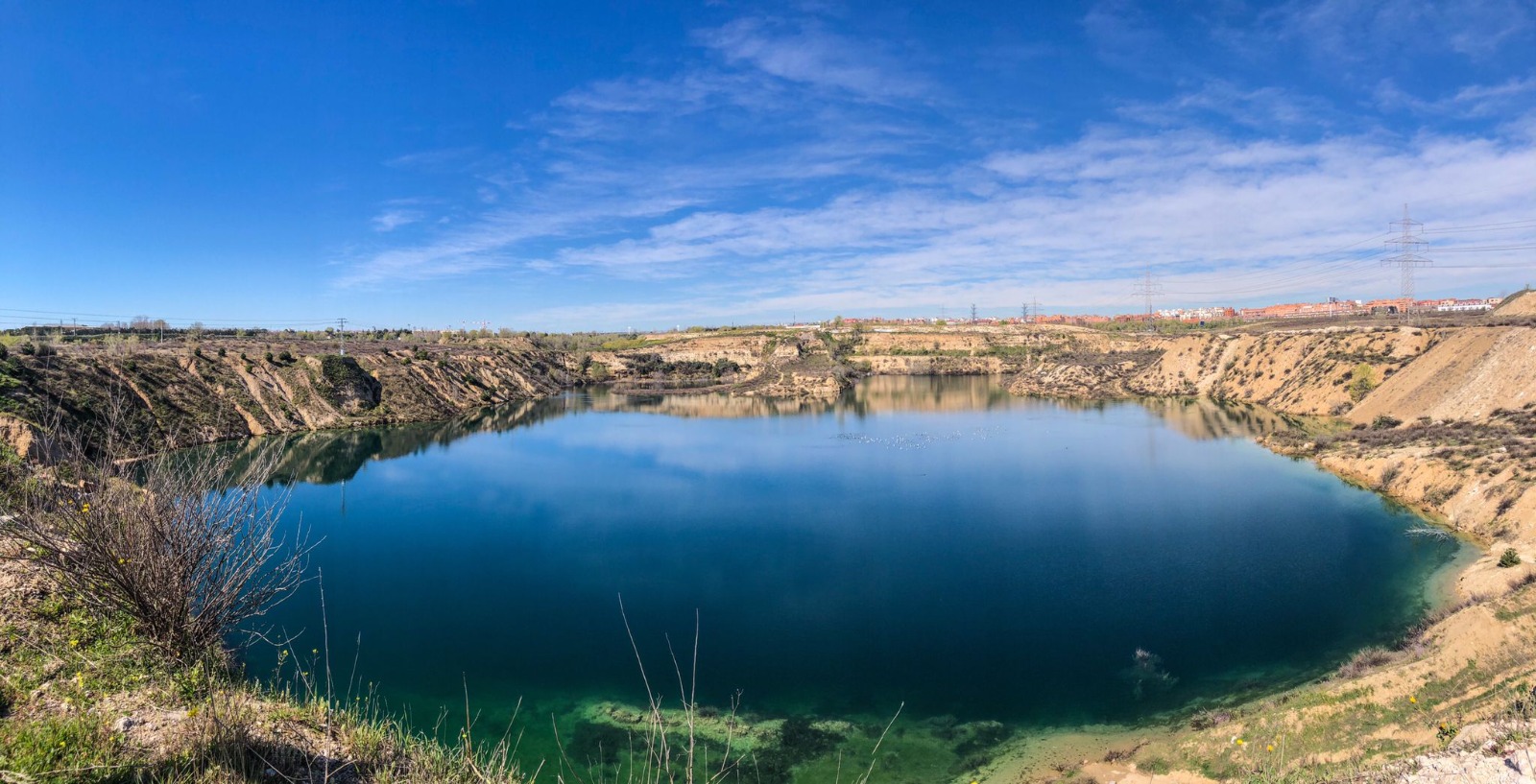
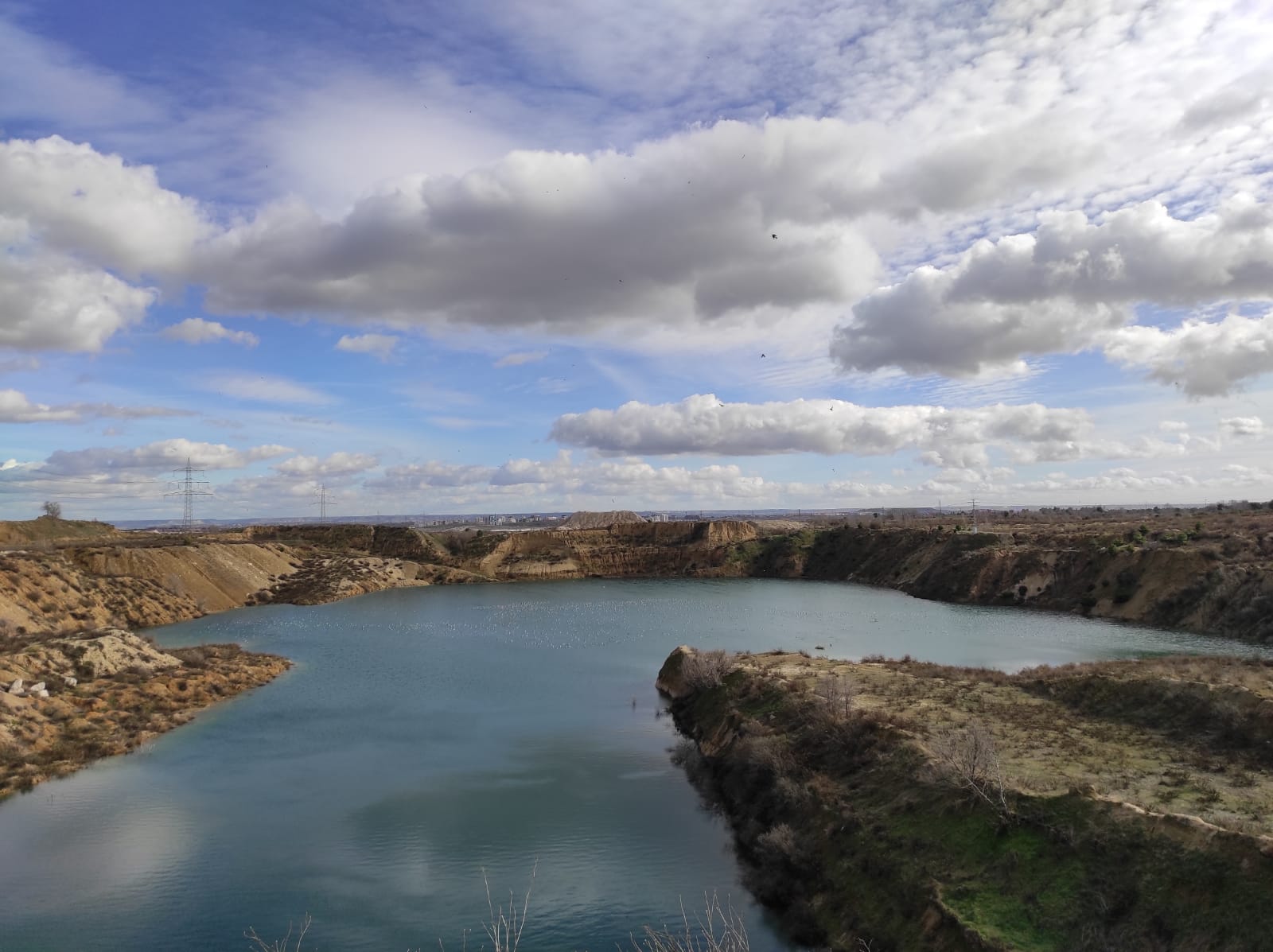
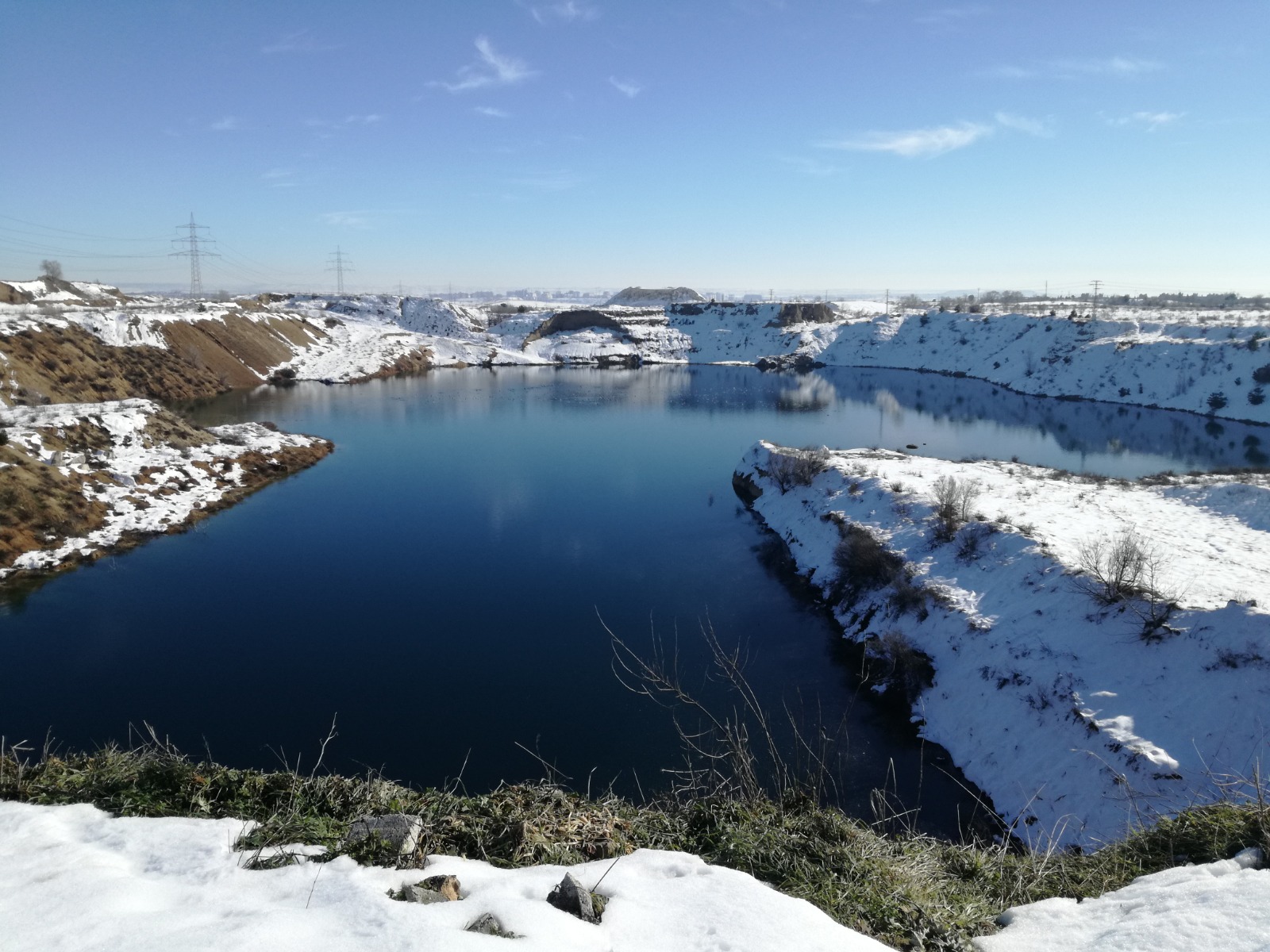
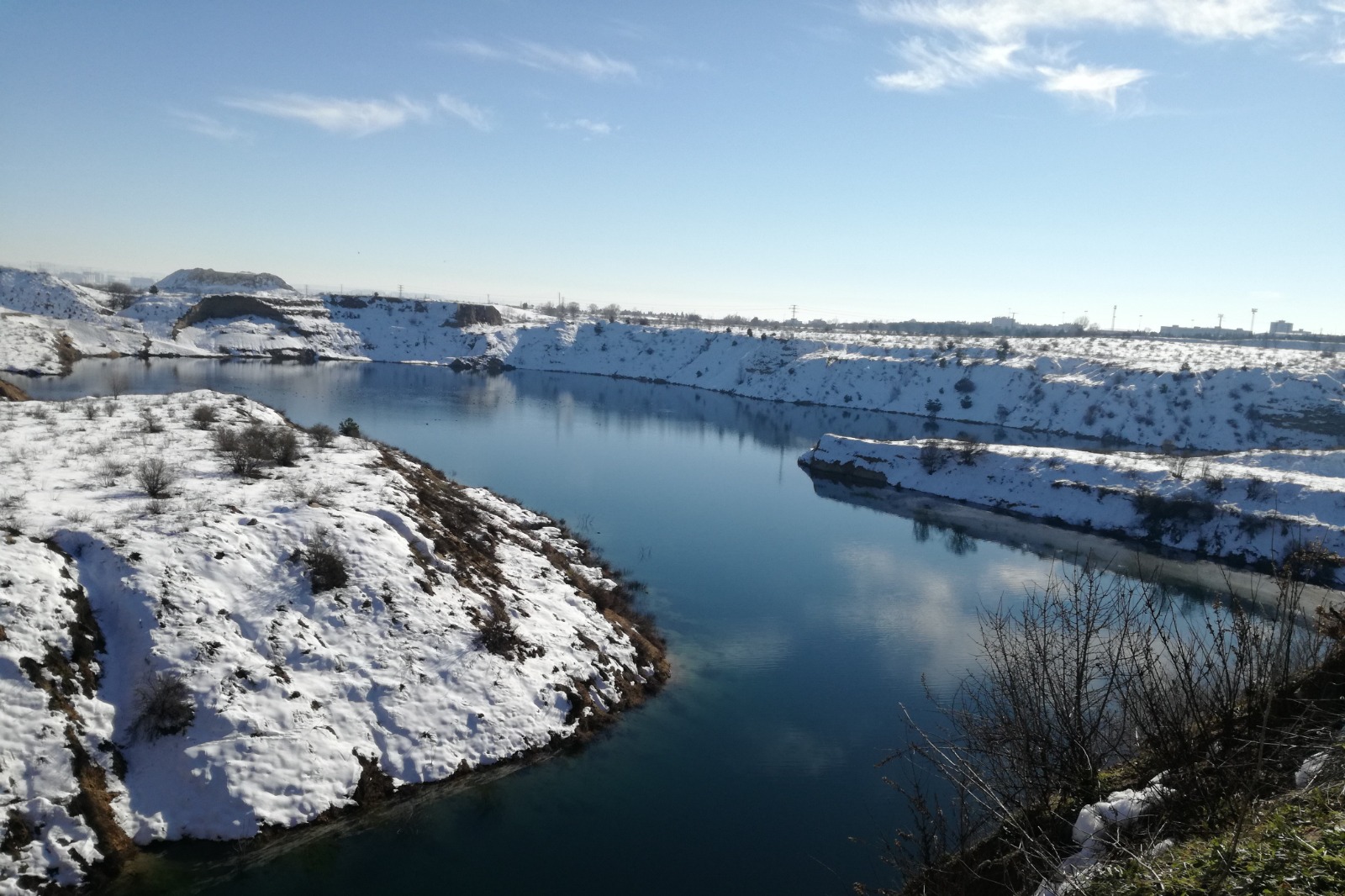
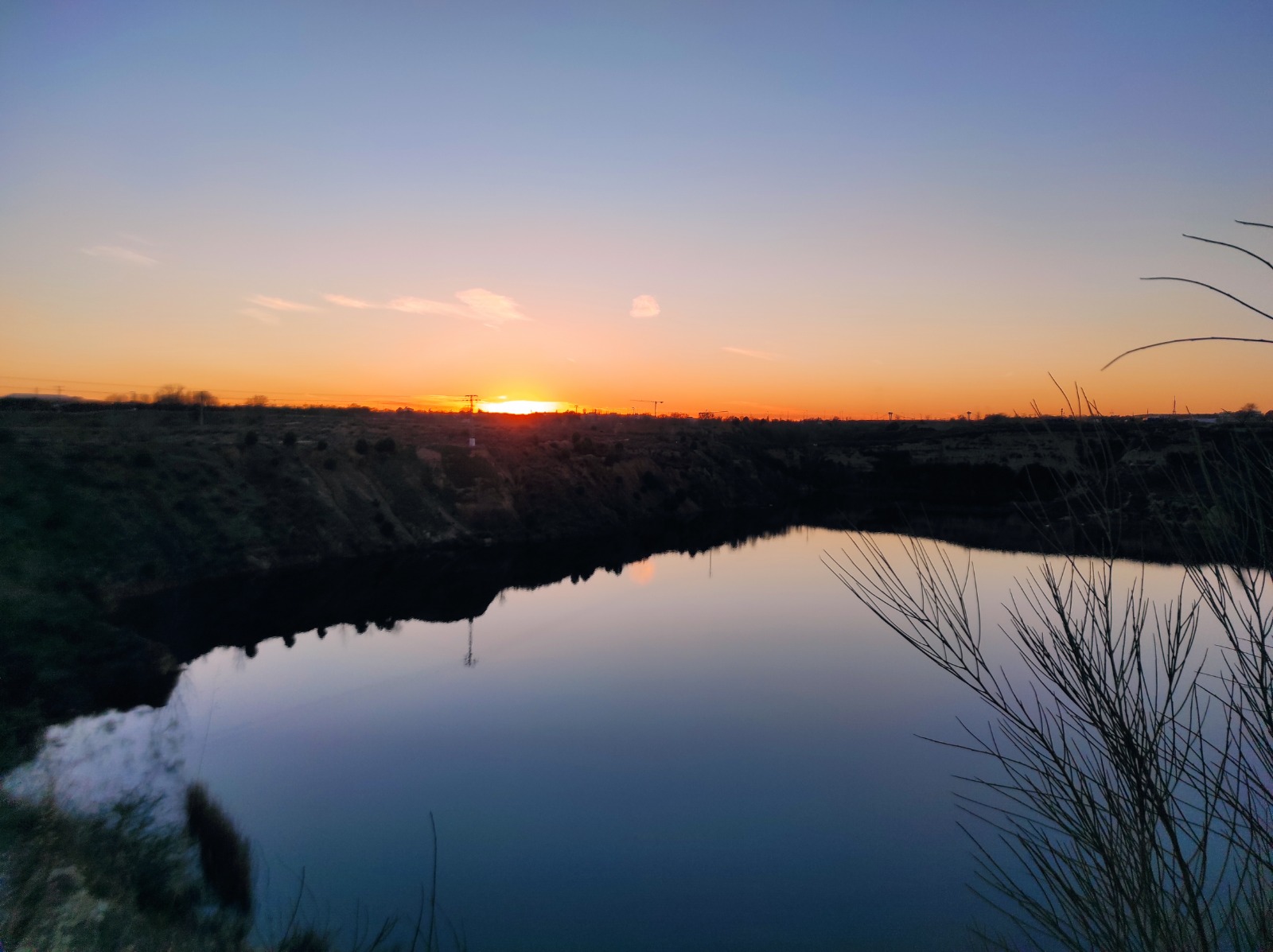
On Madrid’s online map viewer, a nameless body of water stands out in the middle of a wide stretch of wasteland hemmed in by roads, motorways and dual carriageways. The place names still carry a faint rural echo: “Camino de Ambroz a Coslada”, “Alto del Pozo de la Nieve”, “Lugar La Pelada”. That body of water is the Laguna Grande de Ambroz, which formed in the pit of a mine where sepiolite was extracted by open-cast mining between 1977 and 2007.
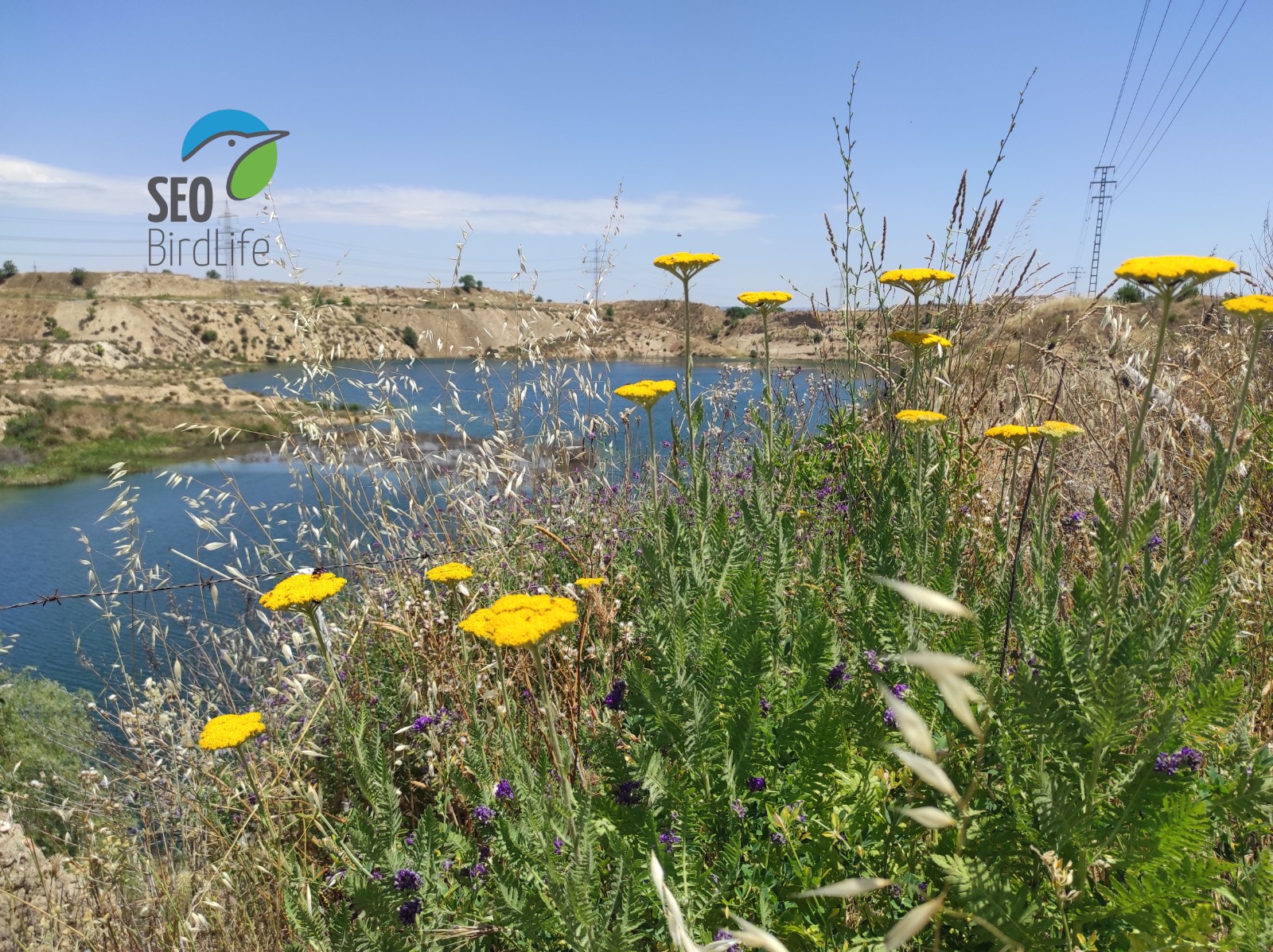
The mine hollowed out the land. When extraction stopped, nobody came back to claim the pit. Water slowly filled the hollow until it formed lagoons, and birds, plants, insects and footpaths followed. For almost two decades the void has worked as a reserve: a space that, precisely because it was never filled, has been able to fill up with life.
The emergence of this wetland, in the middle of some 700 undeveloped hectares, has in recent years drawn the attention of environmental and residents’ associations, which want the area turned into a “Casa de Campo of the East”, a counterpart to Madrid’s great urban park. Meanwhile, the mine has been authorised to resume operations, and a new housing development is planned on the surrounding land. Extraction and urbanisation look like opposite operations, but they rest on the same premise: the hollow is empty as long as it produces nothing, and only gains value once it is emptied or filled. Is a space that has been neither mined nor built on really an empty space?
The dérive
The activity takes the form of a collective dérive: a walk with no fixed route around the lagoon, along paths, through scrub and by the water, guided by whatever the place itself reveals. The idea is to cross a space suspended between what it was and what it is not yet. Each participant will record the experience in the medium of their choice (drawing, photography, sound, writing or simply looking), starting from a few shared questions: what is full and what is empty? When do we decide that a place is empty, and what do we stop seeing when we call it that?
Individual routes will be tracked during the walk with Walking Lines and overlaid on a collective map. At the end of the session, that map will be the starting point for sharing what we found: which presences had gone unnoticed, and what deserves a place in the city. Whatever each person chooses to share will be gathered in a collective notebook of the dérive, an inventory of what inhabits the hollow.
At Ambroz the city does not end: it surrounds the place and waits. The boundary between the urban and the non-urban stops being a line on the ground and becomes a state in time, open and contested. Walking it now is a way of recording a landscape that may not stay this way, and of thinking about the other city from what already exists in its gaps.
Limbic Zones
Limbic comes from limbus, “edge”. Ambroz is an edge in two senses: a territory in limbo, neither city nor countryside, neither mine nor park, and a place you cross with your body. The title also plays on the limbic system: the dérive comes from psychogeography, which studies how our surroundings act on what we feel.
Details
- Date: Saturday 21 November 2026, 11 am – 2 pm
- Venue: Ambroz lagoons (Vicálvaro – San Blas-Canillejas, Madrid)
- Framework: The Other City 2026, a project by CEPS Projectes Socials and #plantauno (full programme)
- With the participation of: the residents’ platform Salvar las Lagunas de Ambroz y su Entorno
- Concept and facilitation: Marco Noris
- Places: 35