Drawing while Walking · Barcelona Dibuixa, Museu Picasso
2026
A participatory action at the Museu Picasso in Barcelona as part of Barcelona Dibuixa 2026: six cartographies exhibited as unfinished works in a gallery of the museum, completed by 520 people who went out to draw the neighbourhood by walking, on a paper map and with no route planned in advance.
Barcelona Dibuixa 2026 · Museu Picasso de Barcelona and Institut de Cultura de Barcelona
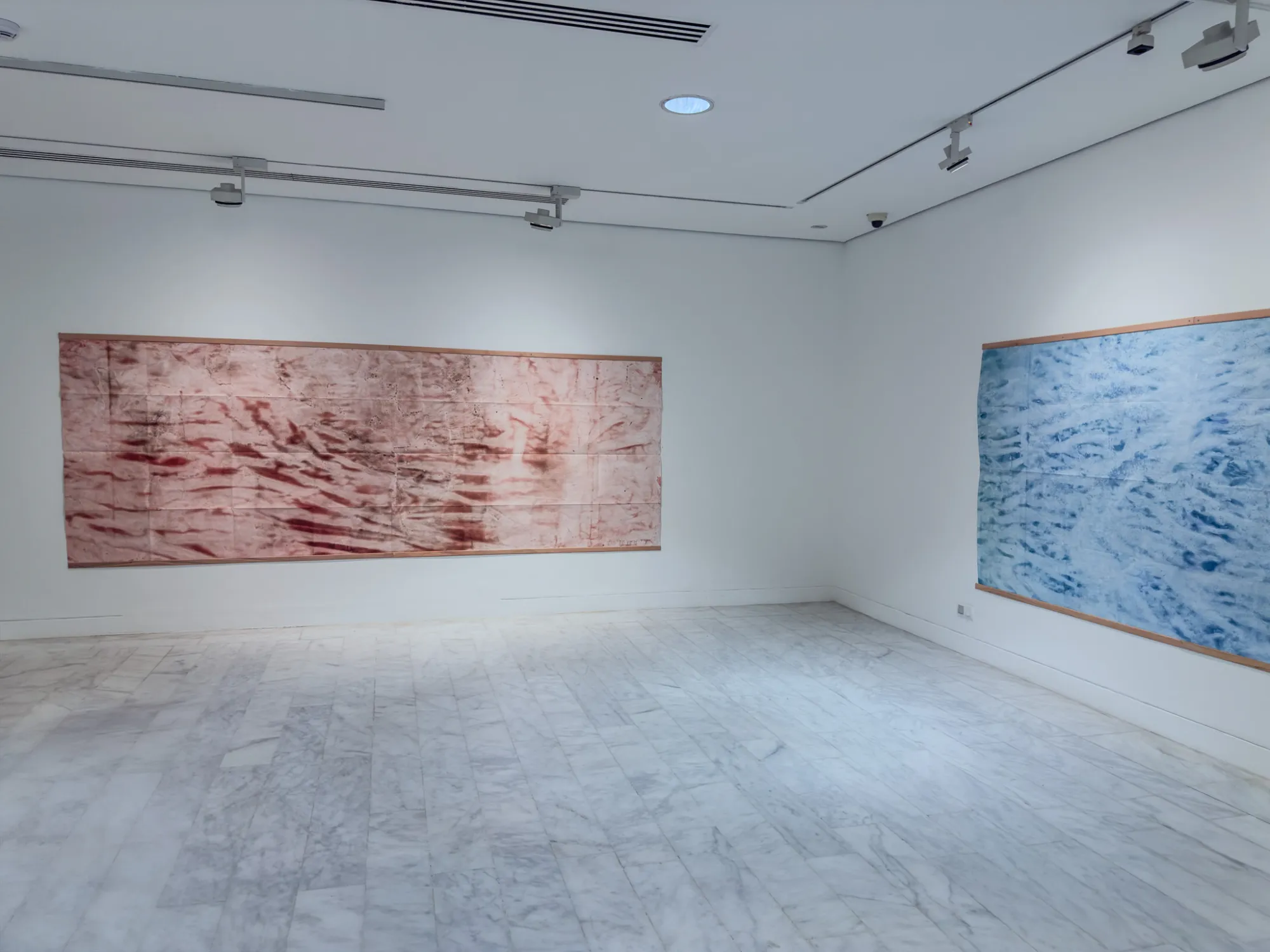
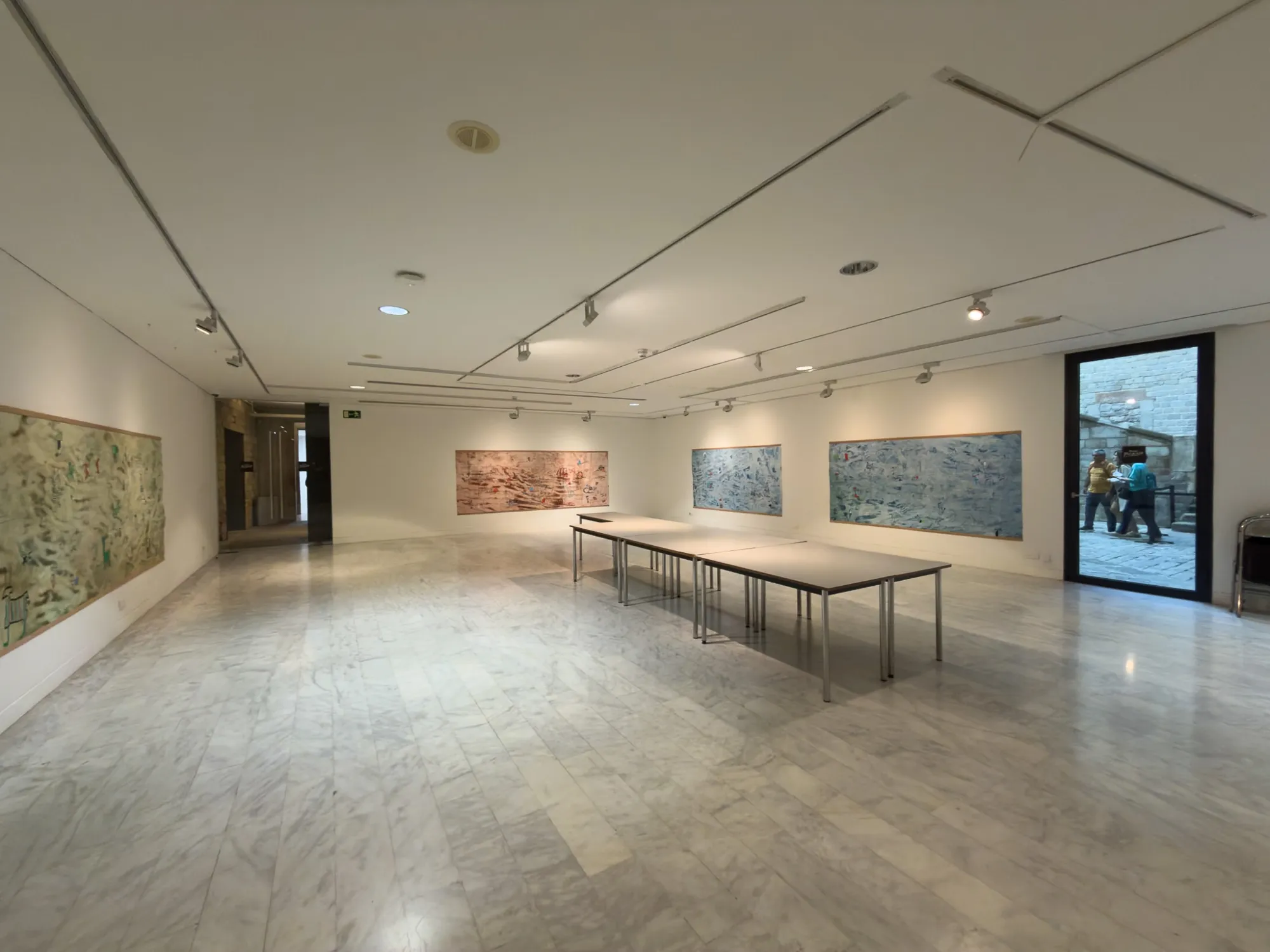
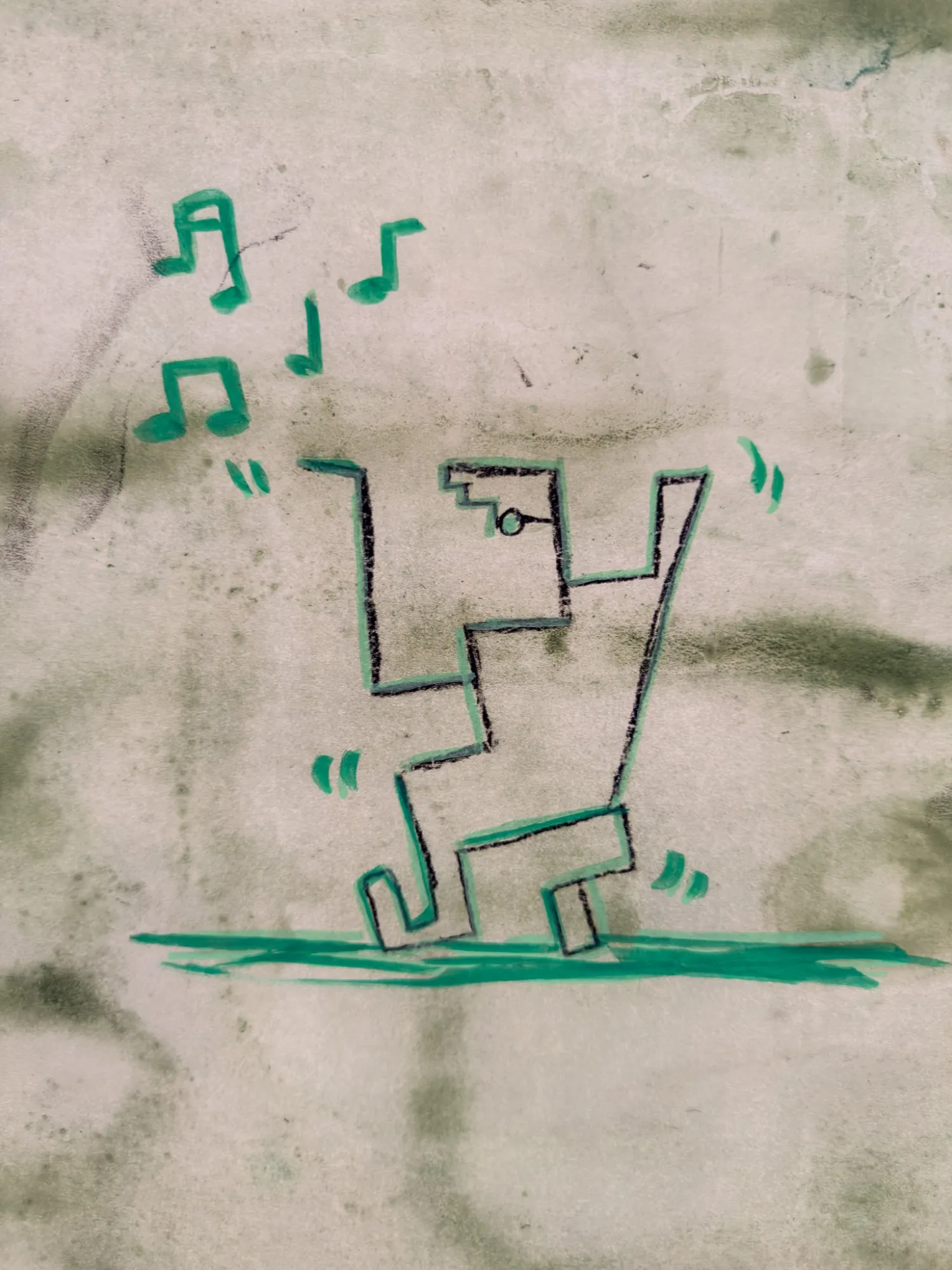
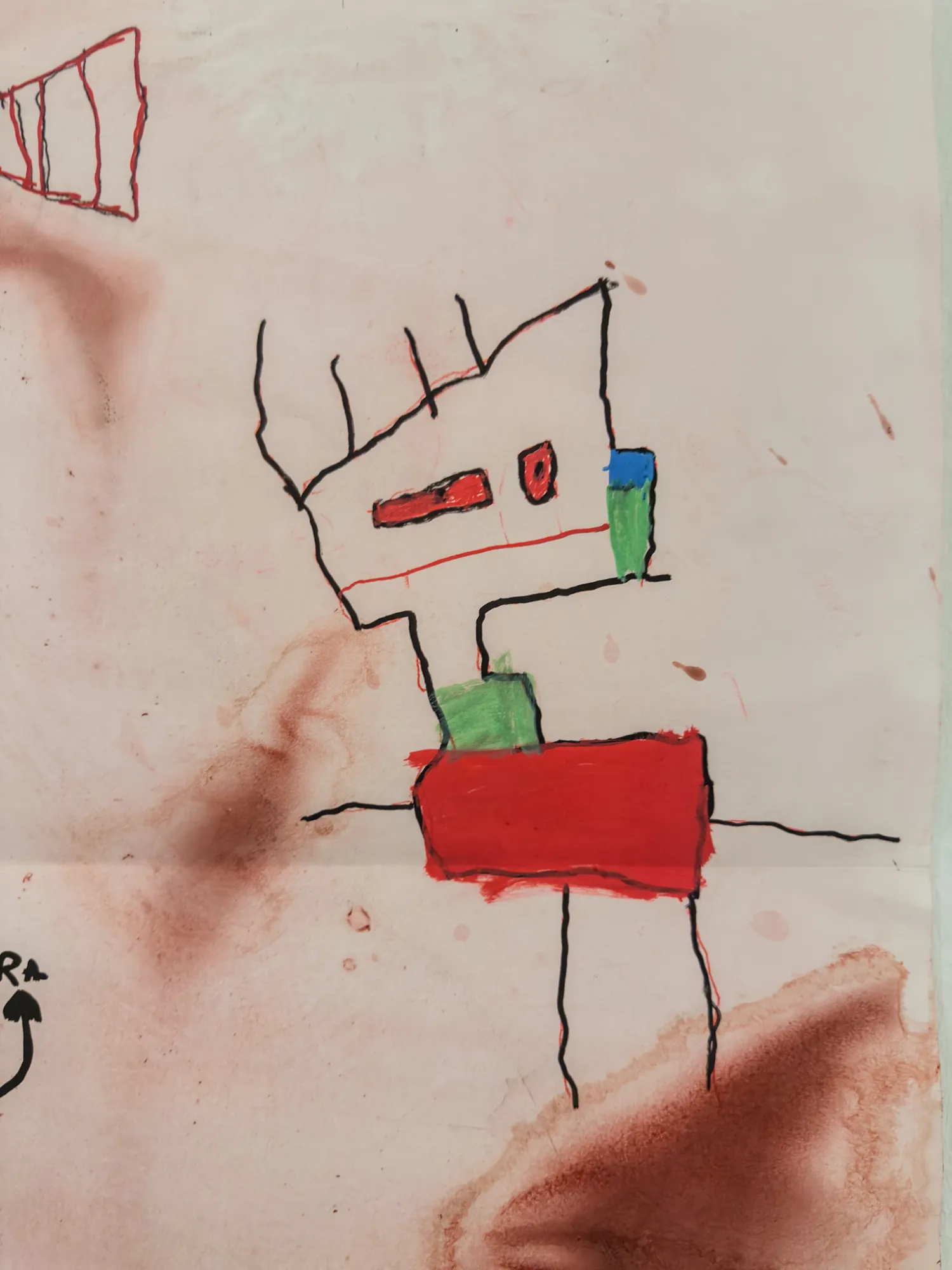
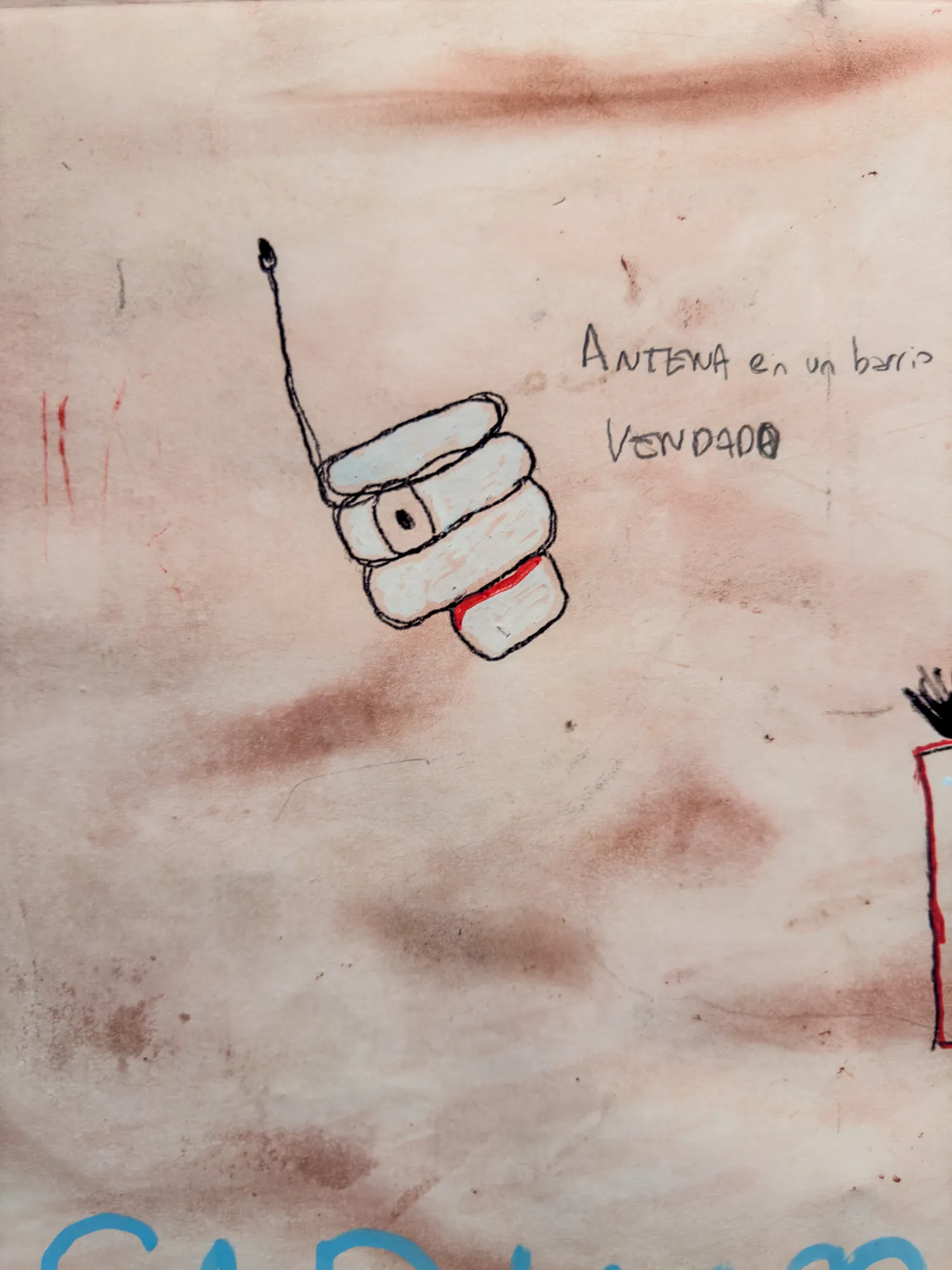
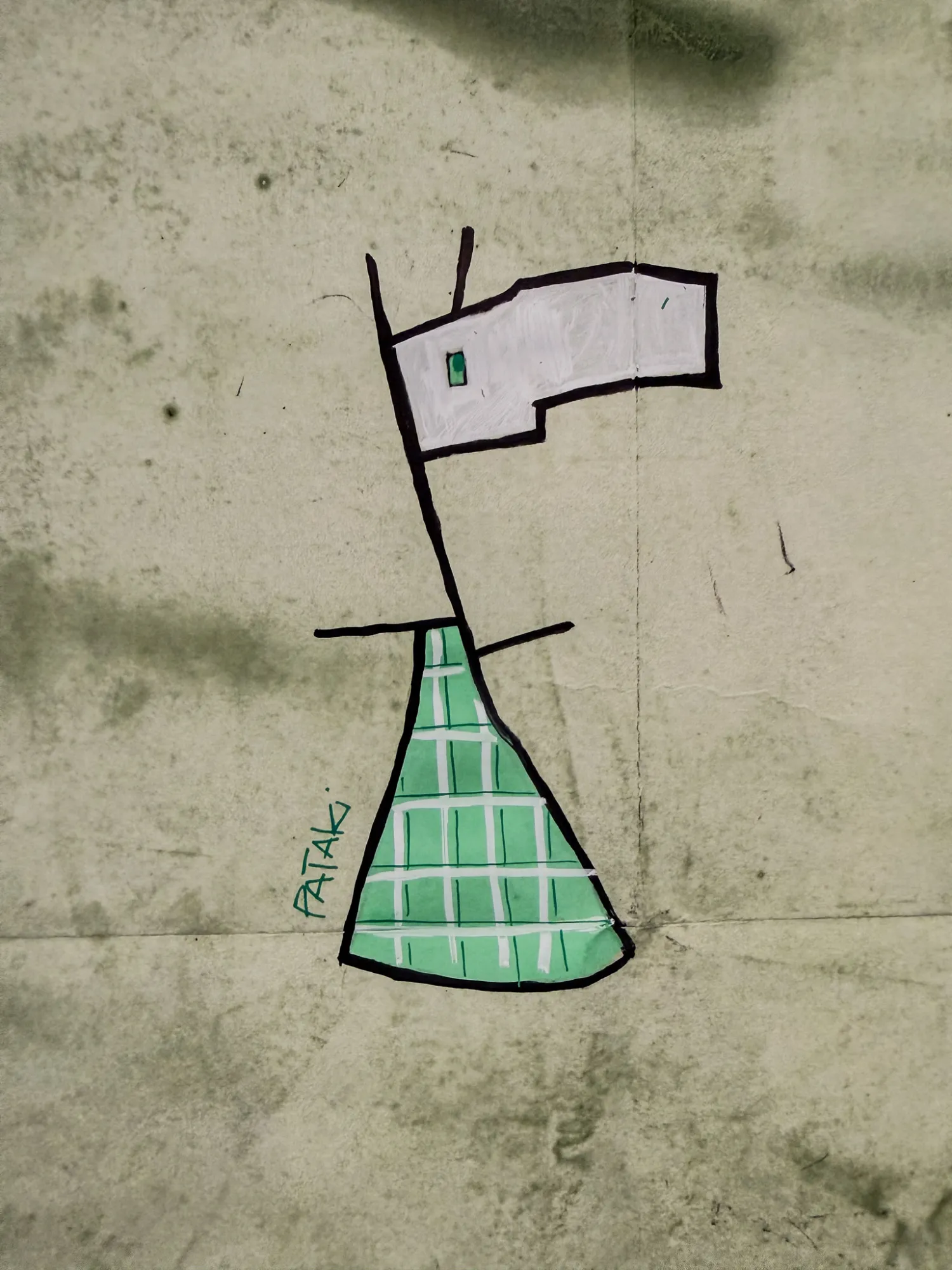
Over the weekend of 17 and 18 October 2026, as part of Barcelona Dibuixa, a gallery at the Museu Picasso in Barcelona presented six abstract cartographies as unfinished works, their completion left in the hands of the public. 520 people took part. They left the museum to walk, drew their route as they went, and returned to the gallery to inscribe it on the shared maps. By the close, the six pieces added up to 22 linear metres of paper, 1.5 metres high: a choral cartography of the neighbourhood, of distributed authorship.
Drawing while Walking extends Marco Noris’s research into walking as a form of knowledge and cartography as a language, the same line that runs through Walking Lines. Here, however, no device is involved: the recording is done by the body, a pencil and a paper map.
The work as threshold
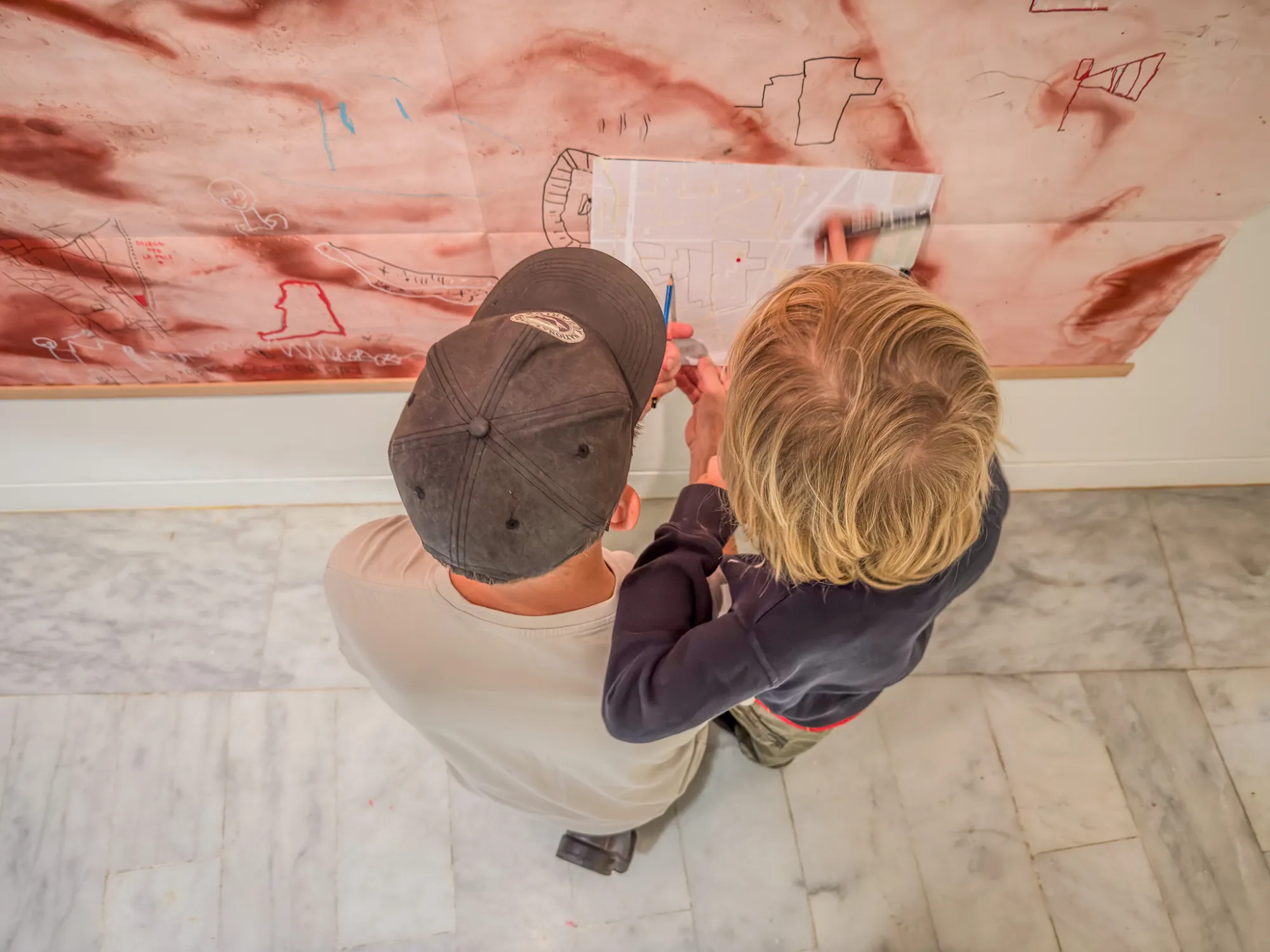
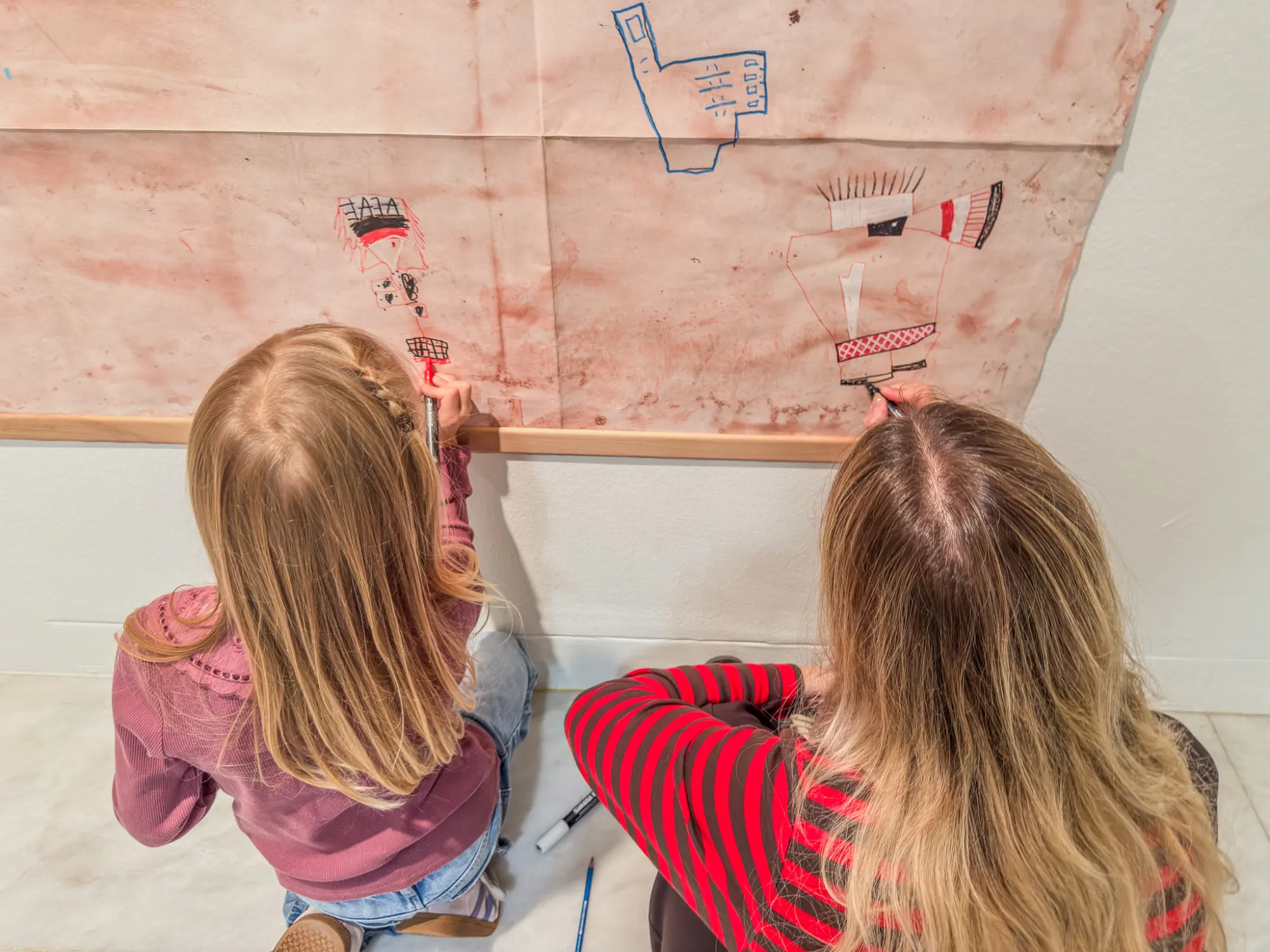
The decisive gesture of the project lies in how it was exhibited. The maps were not offered as workshop material: they occupied the gallery as works. To enter was to stand before exhibited pieces and, at the same time, to be invited to intervene in them. In a museum, and particularly at the Museu Picasso, where the relationship with the work is governed by distance, that permission bordered on the forbidden, and much of its force lay in that tension. A blank sheet would have invited participation; a work already begun invited continuation. Each visitor ceased to be a spectator and became co-author of a work in progress.
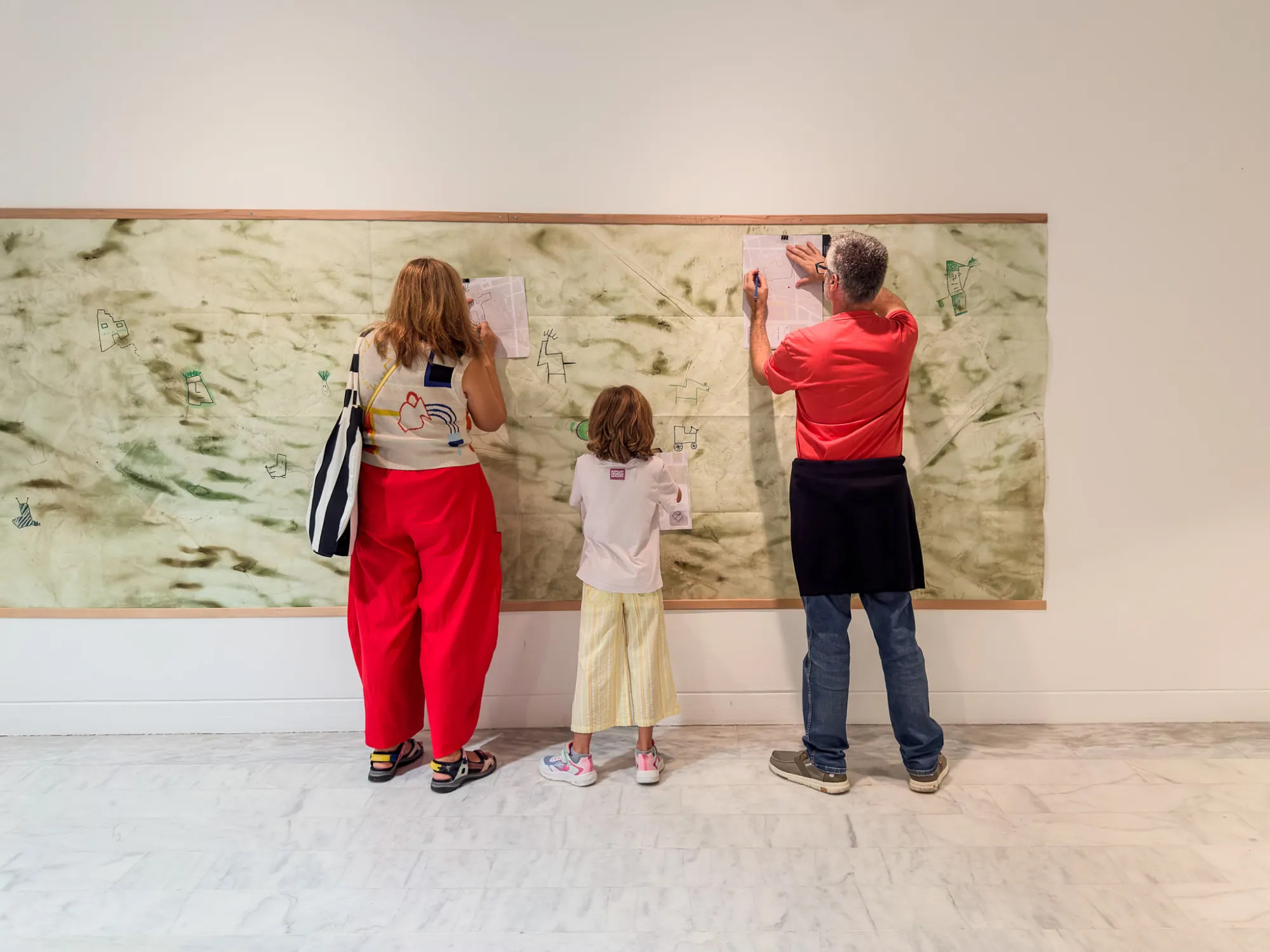
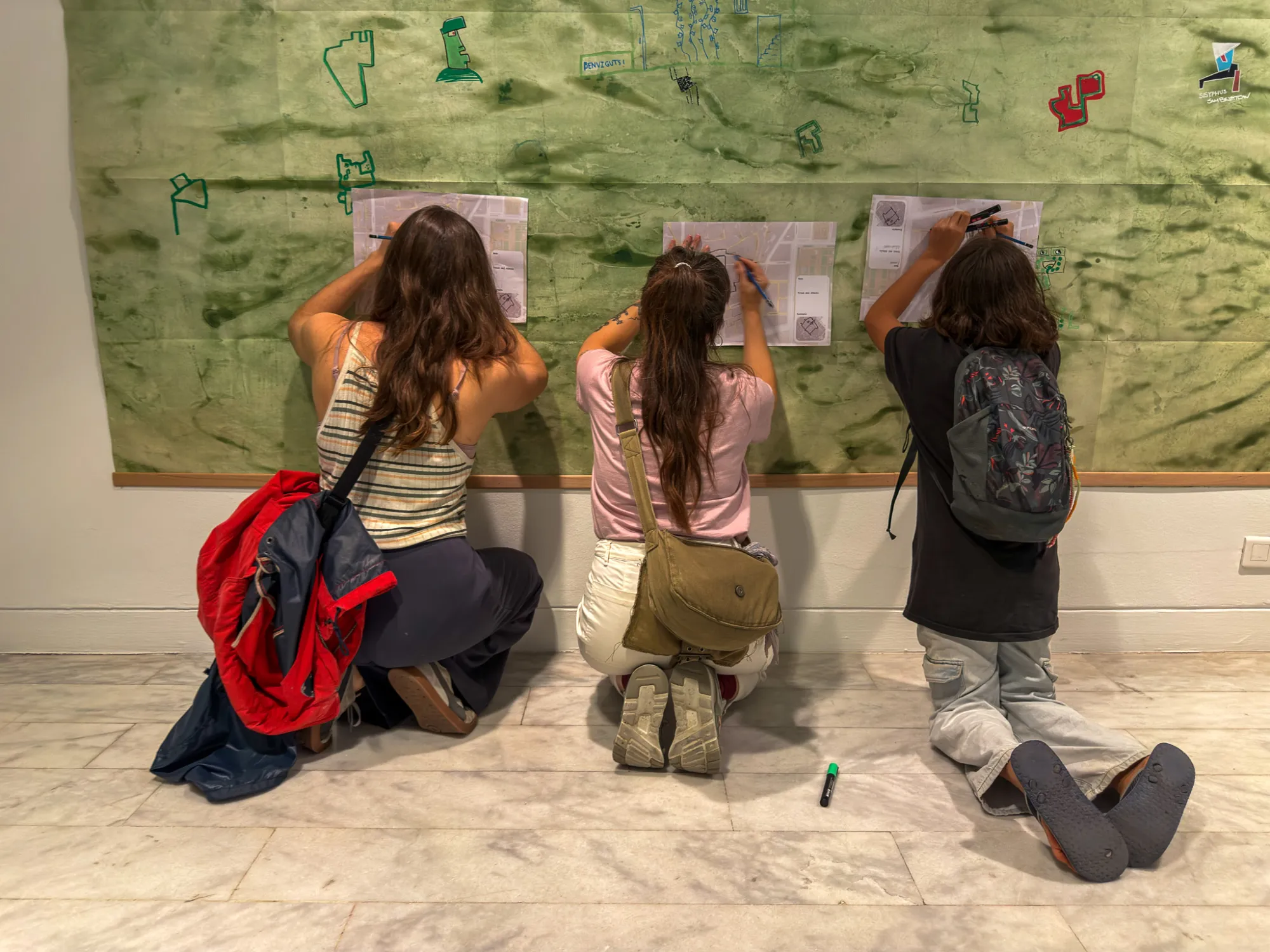
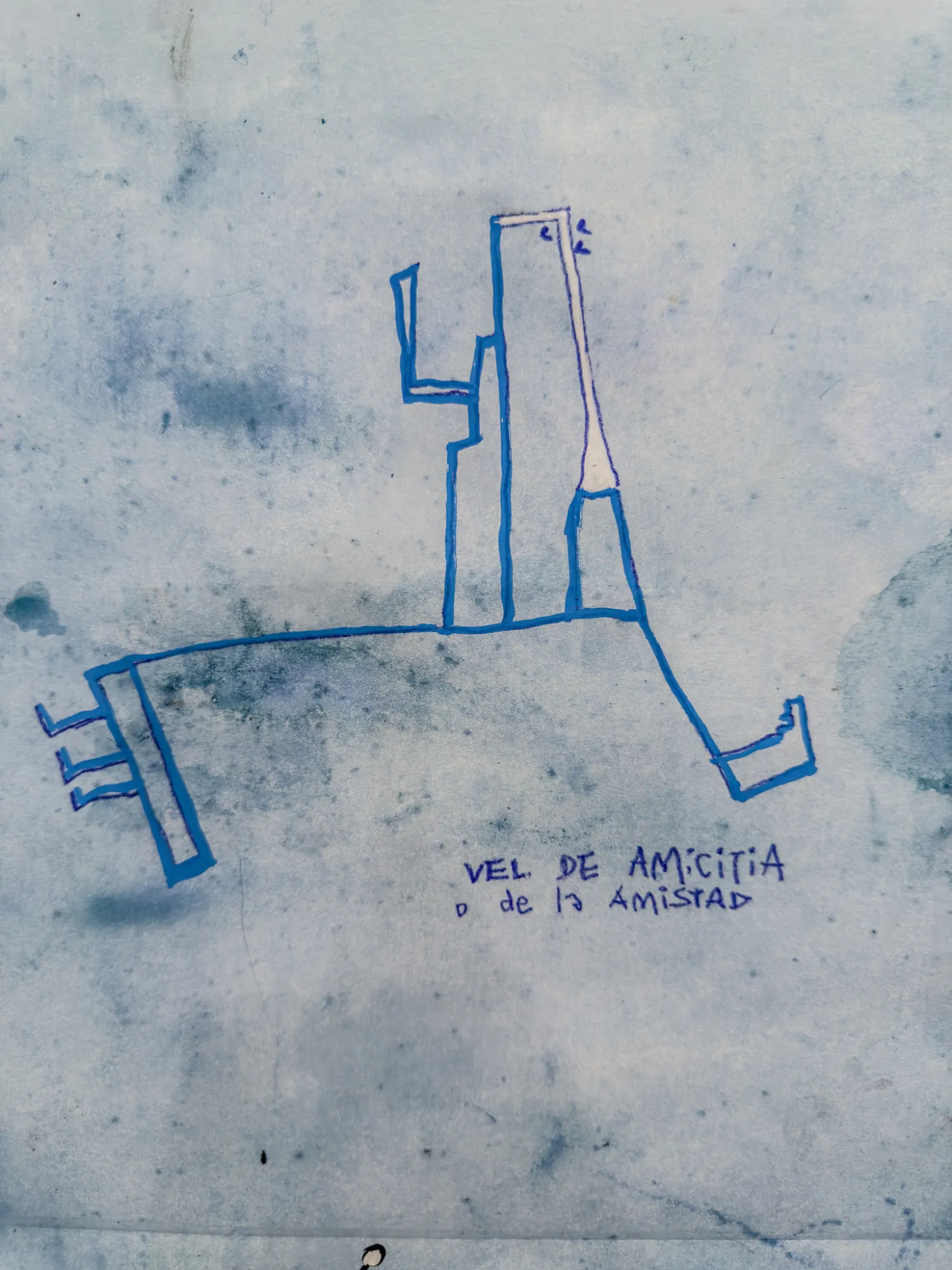
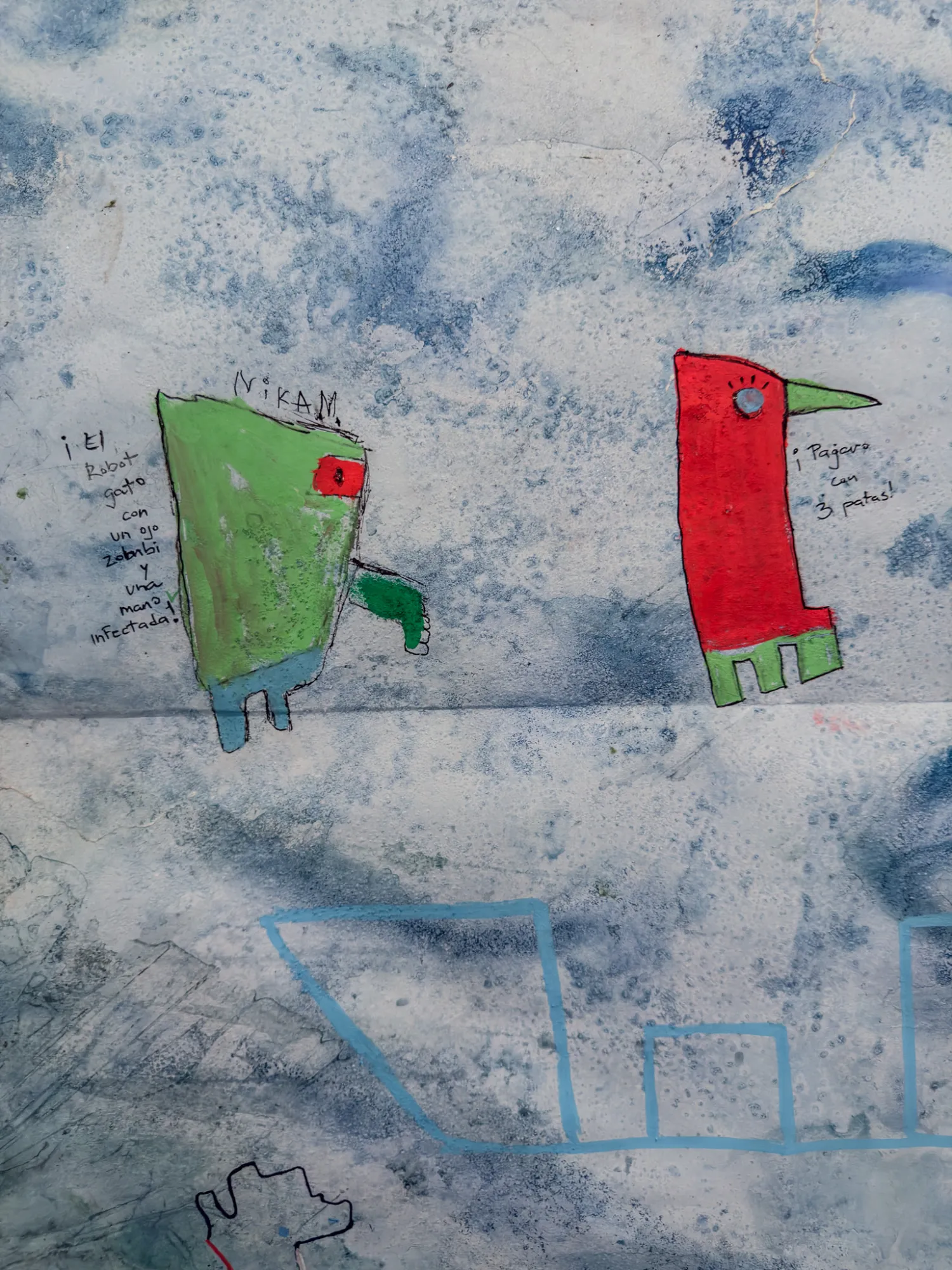
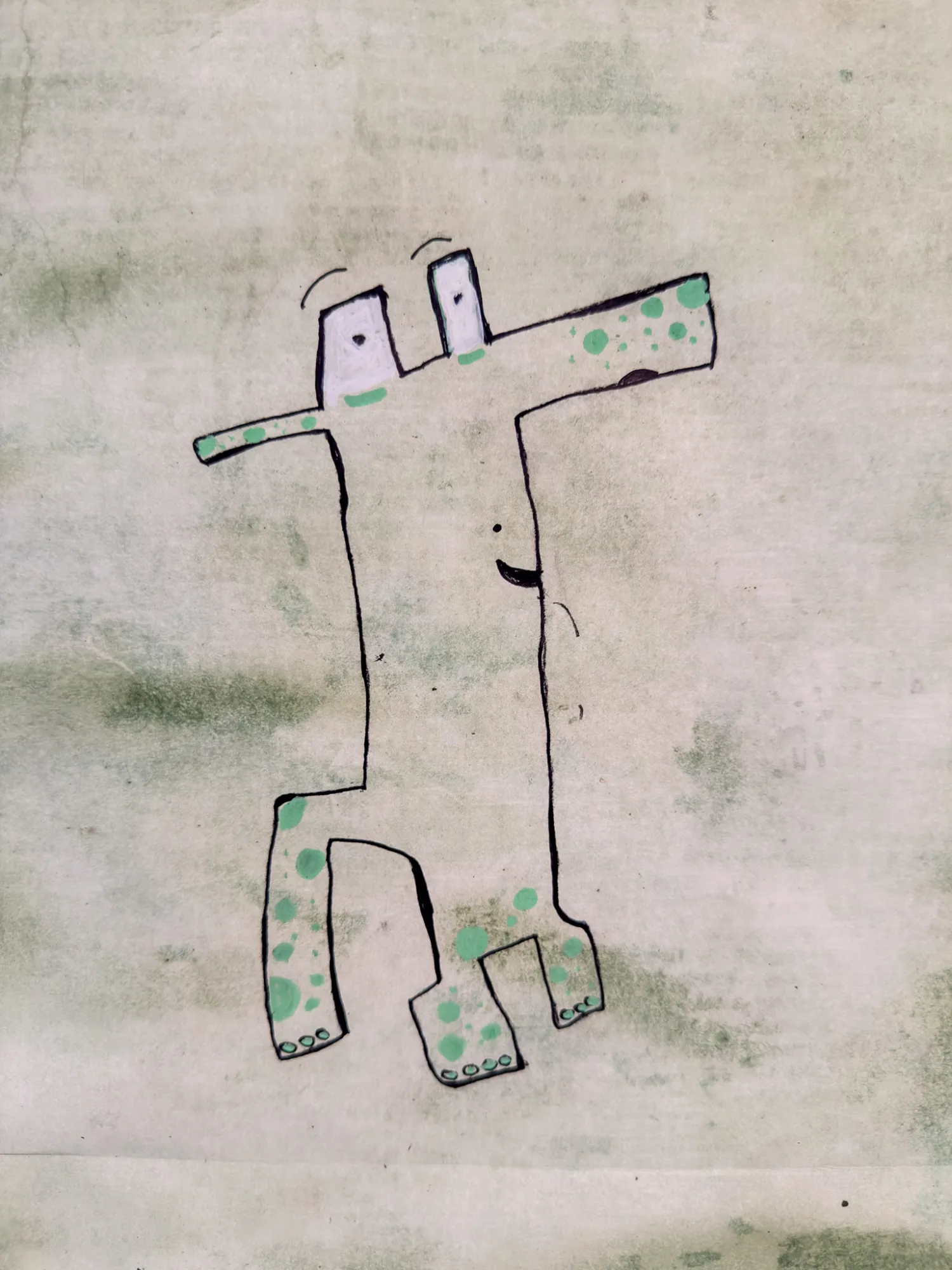
Authorship was, moreover, relational. No one drew on an empty space: each line positioned itself in relation to those already there, crossing them, extending them, seeking out their gaps or overlapping them. Over two days the six cartographies grew in this way as open works, sedimented layer by layer, their final form answering to no individual will.
Drawing while walking, walking while drawing
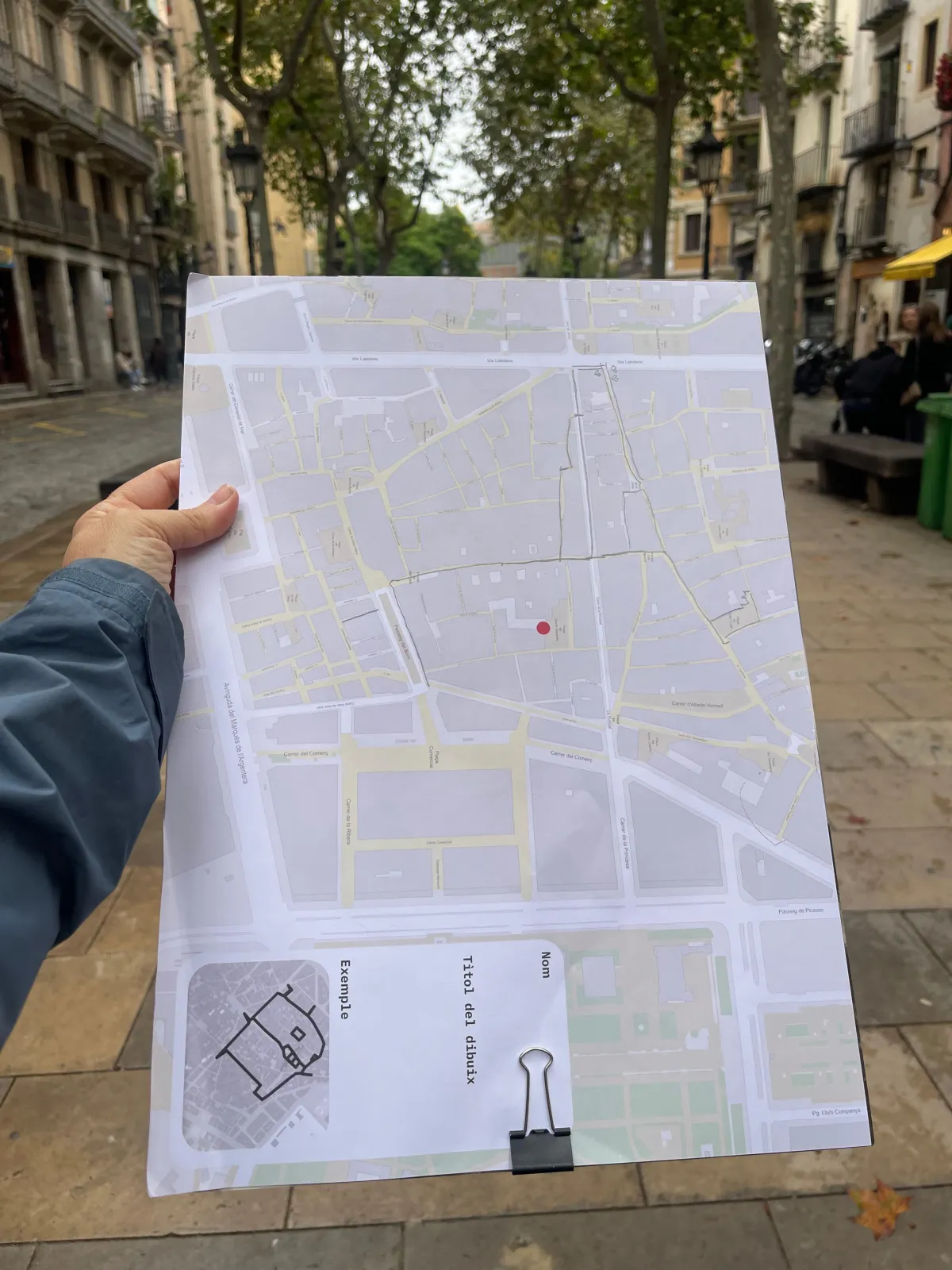
Each participant left the museum with an A3 drawing board and a map of the neighbourhood, on which they drew in real time as they walked. There was no route planned in advance: the drawing was decided along the way. People drew what they walked and walked what they wanted to draw. In that back-and-forth between hand and feet, neither governed the other; the line emerged from their negotiation.
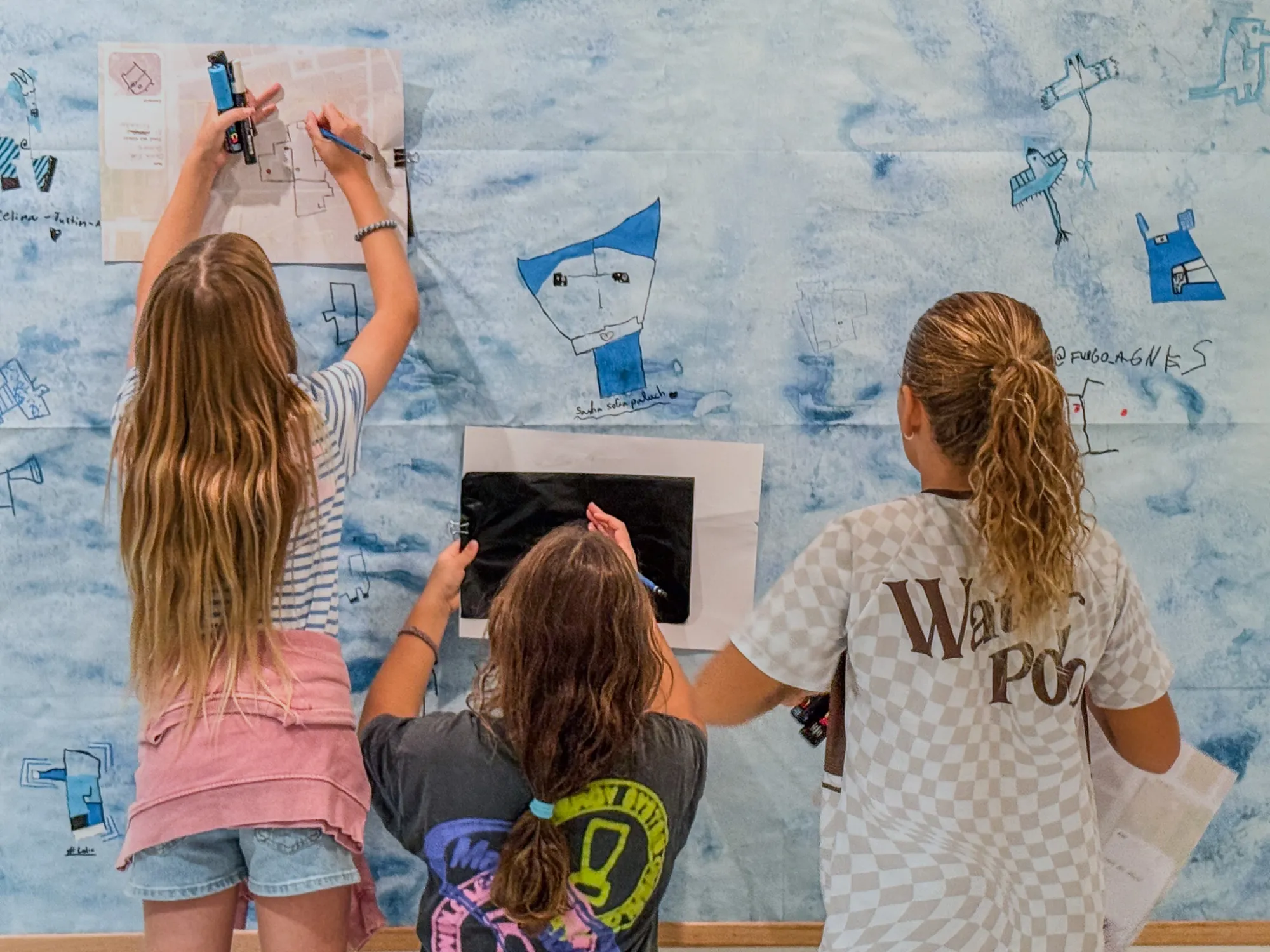
The city took part in the drawing too. Every choice of direction (turning, carrying on, crossing a square, slipping into an alley, retracing one’s steps) was already a graphic gesture, and every obstacle or opening in the urban fabric was inscribed in it. The drawing was not imposed on the territory: it arose from a dialogue with it.
Taking to the streets
Leaving the museum to draw reverses its usual logic. The institution ceases to be an enclosure turned in on its collections and becomes a point of departure and return, a threshold between gallery and street. Walking with a graphic intention alters the relationship between body and space: the journey is no longer the shortest distance between two points but becomes form. Walking thus works as a way of looking at the world and as a form of agency: deciding where to go, stopping, deviating, occupying public space with a purpose of one’s own.
The paper map
Here cartography shifts from its scientific function, location, towards its potential as a creative resource. For some of the participants it was probably the first time they had held a paper map, and the difference is not a minor one. A digital map places whoever consults it and reduces the city to a route towards a destination. A paper map requires you to orient yourself and gives back the whole neighbourhood: what lies to one side, what will not be walked, what might have been another path. It restores the context, not just the destination.
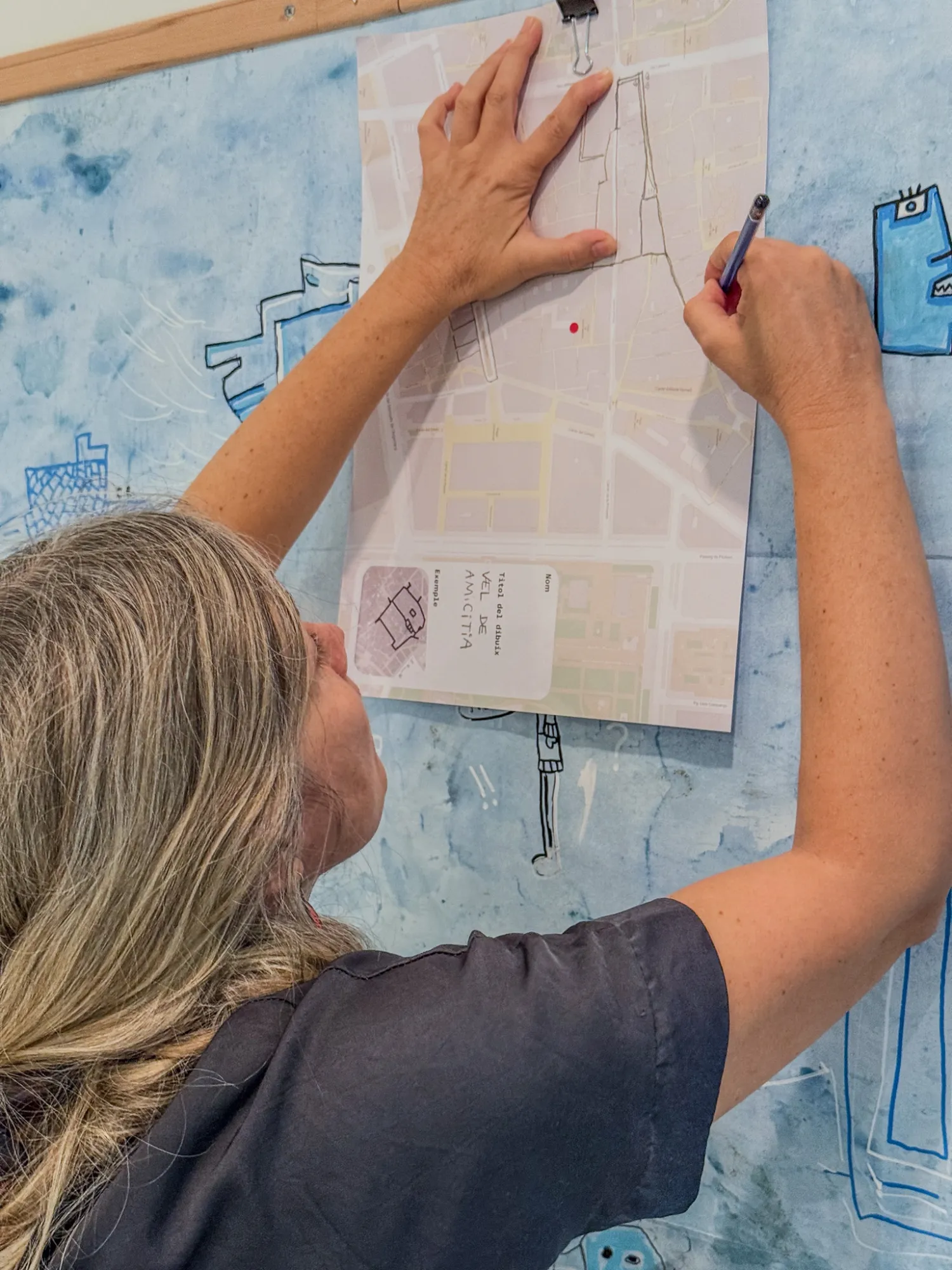
On that surface, the drawing does not show where one is, but how one has been there: where each body passed, where it paused, where it decided to change course. The result is not a functional map but a sensory one.
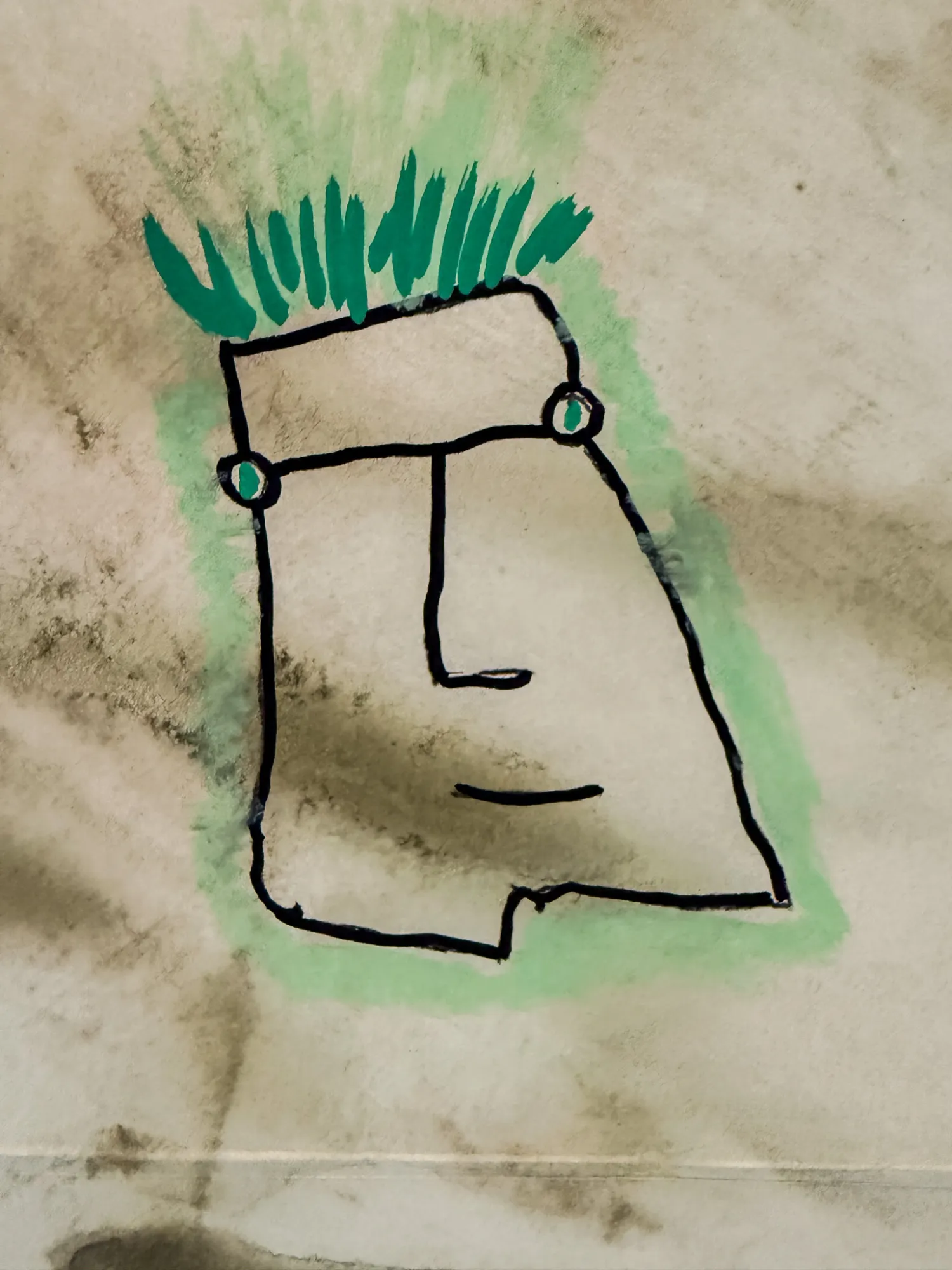
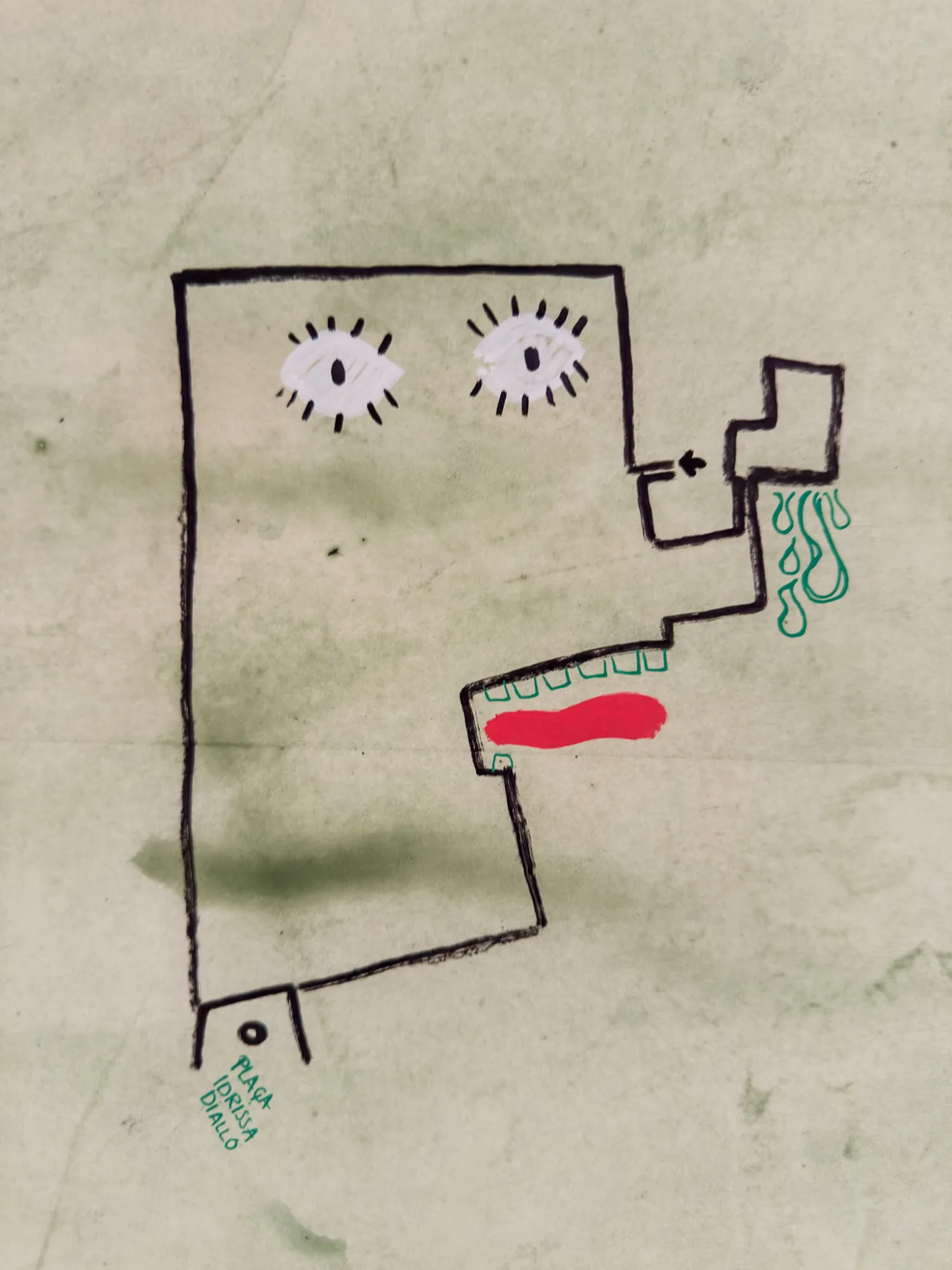
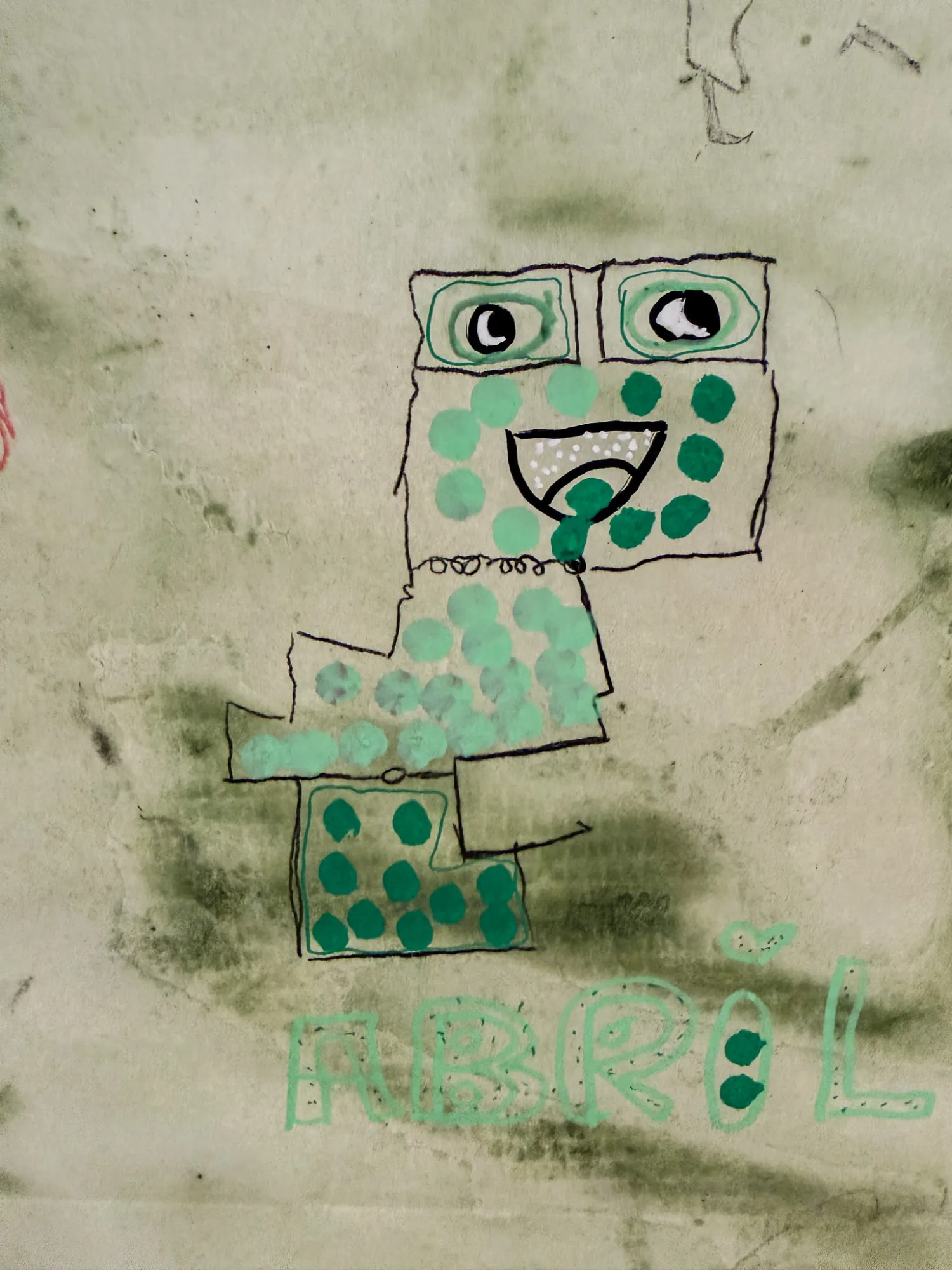
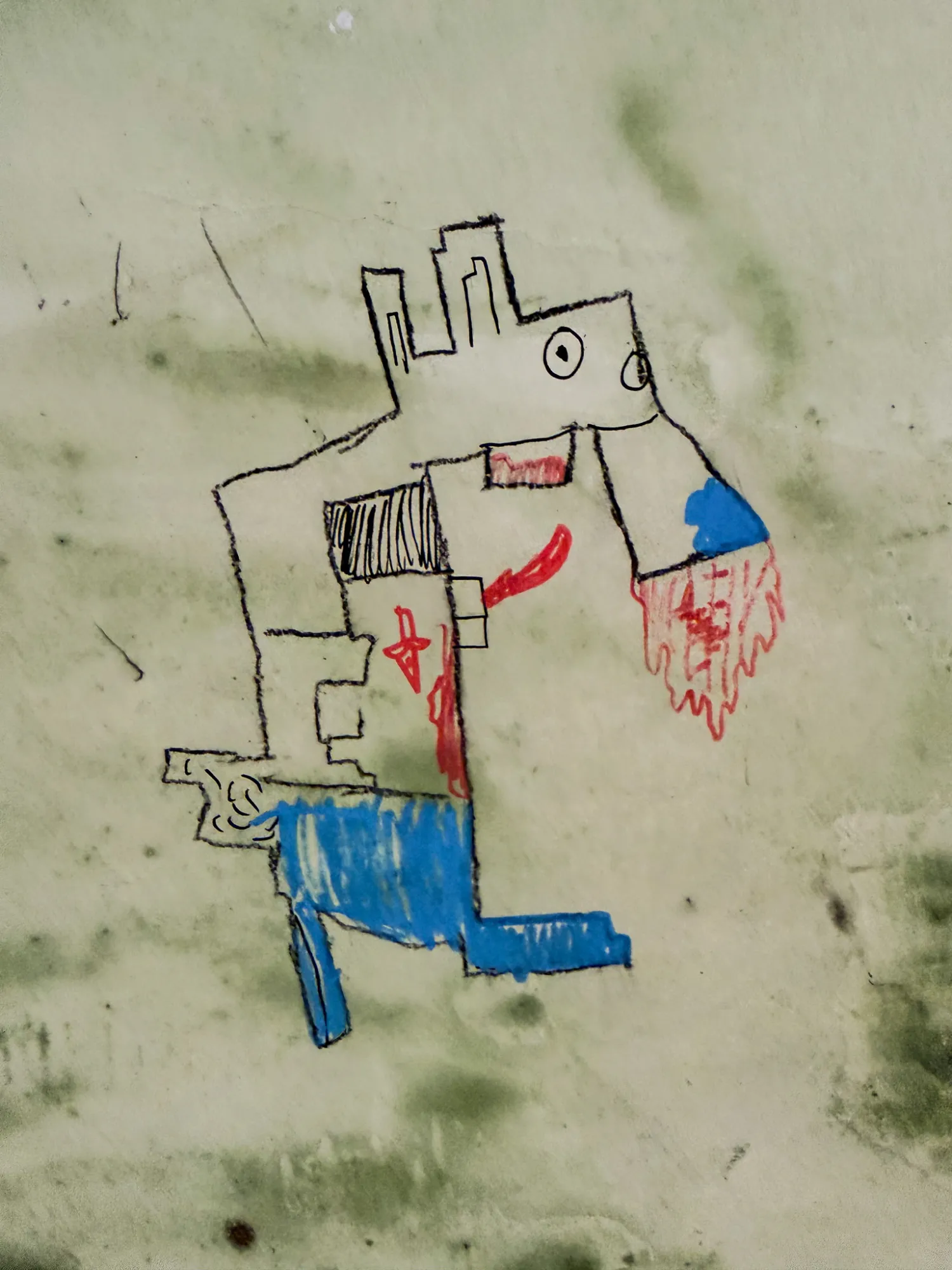
The experience continues in Drawing as a Learning Tool, the session of the Barcelona Dibuixa.edu teacher-training course in which Marco Noris takes part on 5 November 2026, at the same museum (Barcelona Dibuixa.edu).
Details
- Dates: Saturday 17 October 2026, 4–8 pm, and Sunday 18 October, 10 am – 2 pm
- Venue: Museu Picasso de Barcelona
- Framework: Barcelona Dibuixa 2026, organised by the Museu Picasso de Barcelona and the Institut de Cultura de Barcelona (ICUB)
- Concept and facilitation: Marco Noris
- Participants: 520
- Outcome: six collective cartographies, mixed media on paper; 22 linear m × 1.5 m in total