In Satan’s kingdom
Half in earnest, half in jest, I’ve lately been reflecting on how our world has turned into a sinister Hollywood film, in which a demonic invasion is bent on building a hell on Earth. The architect of this plot seems to be one of the great protagonists of religious narrative: Satan, an archetypal entity that embodies absolute evil in opposition to good.
«Satan» and «Satanas» are interchangeable terms that come from the Hebrew sâtan (שָּׂטָן), meaning «adversary» or «accuser». The word devil, by contrast, comes from the Greek diábolos, meaning «slanderer» or «false accuser», and is probably a translation of the original Hebrew term (6th–4th century BC), made between the 3rd and 2nd centuries BC. In any case, both terms have ended up describing an evil figure set against the divine.
In an age marked by global warming, disinformation, hatred and division, in which a band of grotesque villains has seized power, I can’t help thinking of this ancient myth. The higher the planet’s temperature climbs, the closer I feel to a hell peopled by orange demons, chainsaw lords, entrepreneurs of darkness and other black-shirted devils.
To keep playing along, I asked the AI (ChatGPT via Perplexity.ai) to impersonate Satan and describe its strategy for conquering the world.
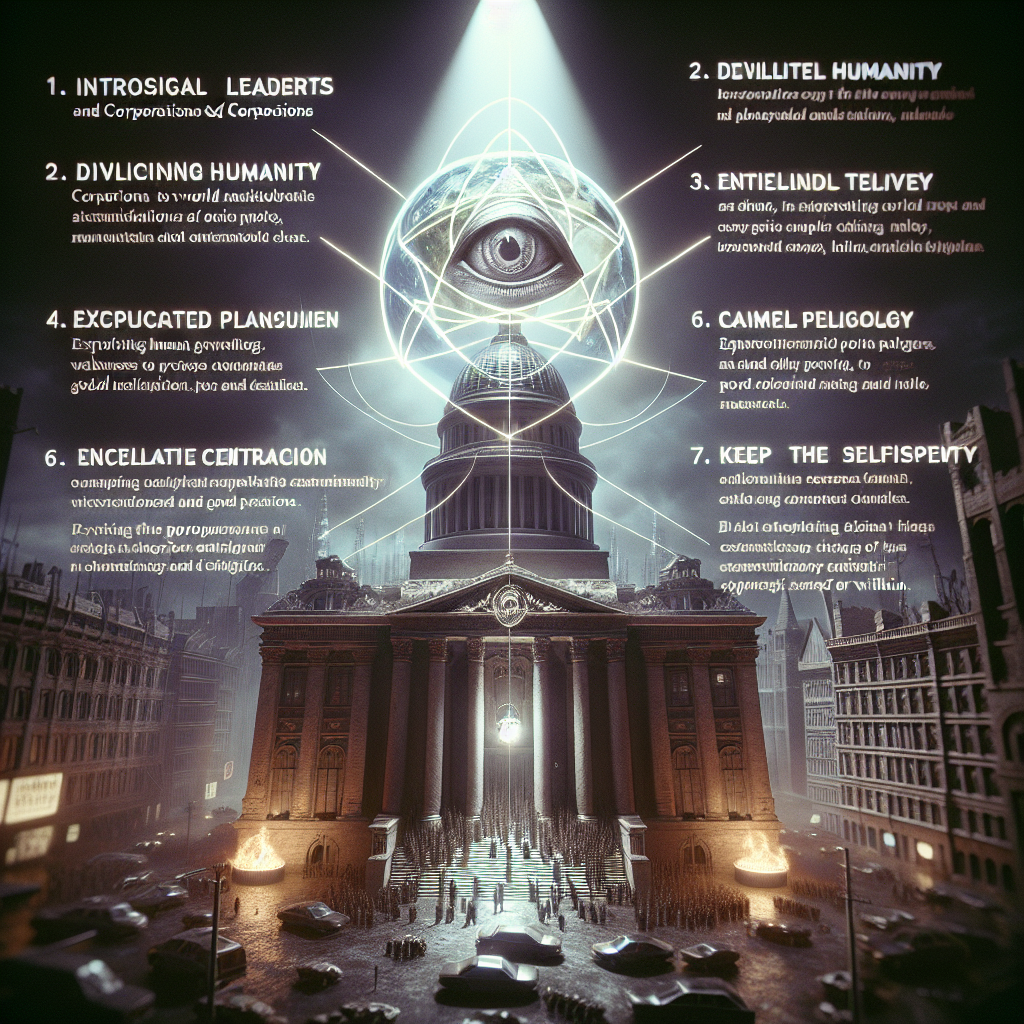
Image generated by DALL·E to illustrate its answer to my question. #AI-generated
ChatGPT organised its «hypothetical» plan into seven points:
- Control through influence and manipulation.
- Exploiting human desires.
- Creating social divisions.
- Technological control.
- Destruction of the environment.
- Creation of a new religion.
- The use of fear.
The diabolical plan laid out by the Artificial Intelligence describes with precision the reality of the contemporary Western neoliberal world, in which, to quote ChatGPT, «AI acts as oracle, money as dogma, individualism as liturgy and technology as absolute mediator». In this scenario, «the religious does not disappear, but mutates into a form of doctrinaire transhumanism, where salvation is sought in fusion with the machine, the optimisation of body and mind, and digital immortality».
Perhaps we believe that with the death of God the devil has died too. But if it’s true that «the devil’s greatest trick is to persuade us that he doesn’t exist»^[Phrase attributed to Charles Baudelaire], we may well be mistaken. In any case, it’s worth bearing in mind that, although God is dead, Gaia is still alive.