To leave or not to leave the networks of hate?
I think about the mass exodus from Elon Musk’s network (and who knows, perhaps also from Facebook and Instagram, after the announcement of the removal of fact-checking and comment moderation1) and I wonder whether it’s a sensible decision. Personally, I use these social networks very little (X, for example, I haven’t opened in years, back when it was still called Twitter), because, in my opinion, these systems completely lost their interest and usefulness the moment the algorithms took control. And yet the question keeps going round in my head: is it strategically reasonable for news media and creators of truthful content to abandon these platforms, leaving the field clear for the manufacturers of hoaxes, disinformation and hate?
Could this migration away from X represent a new Aventine? When only Musk’s supporters and fans are left on the social network, what will the outcome be? Will they get bored? Will they implode? Will they fall into conflict with one another? Or will they perhaps organise to expand their influence and march on the main Western capitals?
02.02.2025 · Some prefer to keep fighting the cultural battle inside the algorithm’s networks; however, given how they’re designed — with their algorithms and the rest — I think that battle is lost. There’s no single answer, though I do believe that defending our privacy and taking power away from the oligarchs is indeed within our reach.
The Aventine Secession
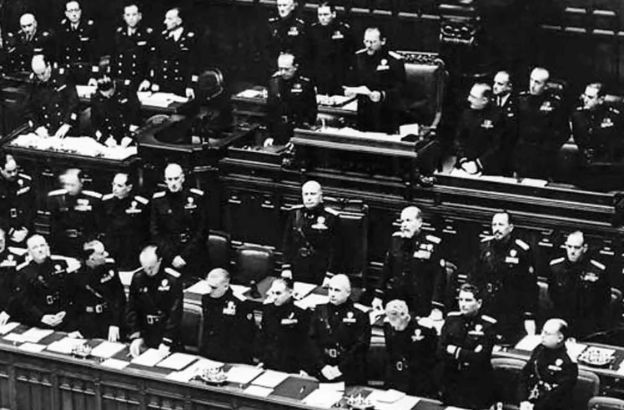 In July 1924, in response to the murder of Giacomo Matteotti, a group of Italian anti-fascist members of parliament (socialists, liberals, popolari and communists) decided to abandon Parliament as an act of protest and boycott against the regime. With this gesture, known as the Aventine Secession, the opposition sought to pressure King Victor Emmanuel III into dismissing Mussolini and defending democratic legality. The king, however, did not act against Mussolini, which allowed the regime to consolidate its power even further.
On Meta’s decision to give up controlling fake news and moderating comments on the Facebook and Instagram platforms, I recommend reading Simona Levi’s impeccable article, «No, esto no es libertad de expresión» (No, this is not freedom of speech), from 9 January 2025.
When you close your account on X (formerly Twitter), there’s a chance that someone could create a new account using your old username, which could lead to identity theft. To reduce this risk, it’s advisable to change your username before deleting the account (for example, from the original @username to a new @user_name). Then, to prevent anyone else from taking your old username (in this case @username), you can create a new account and assign that username to it before deleting your main account. This way you keep control of your original name, but with no content attached.
Reasons to leave the oligarchs’ networks
To decide how to act, it’s essential to consider these variables:
- Dominant thought and the cultural battle: in the debate over whether or not to abandon the networks of hate, some choose to keep waging the cultural battle within them. However, given their design—with algorithms and dynamics that reinforce polarisation—, that battle seems lost from the outset.
- Privacy and data protection: leaving these networks can be a matter of security and ethics, especially when it’s proven that our data ends up in the hands of unscrupulous actors.
- Taking power away from the oligarchs and the big corporations: this alone could be reason enough to change environment, especially if the exit happens en masse.
- Reducing the excess of information and opting for a data ecology: reducing information overload is essential for mental health.
-
Del Castillo, Carlos. “Directivos Trumpistas y Narrativa Ultra: El Giro de Zuckerberg contra los Verificadores.” elDiario.es, 7 January 2025, www.eldiario.es/tecnologia/directivos-trumpistas-narrativa-ultra-giro-zuckerberg-verificadores_1_11947752.html. ⤶